


If you are researching how to become an ordained minister in Maine, start with the role you want and the state rule that matches it. Maine lets an ordained minister of the gospel solemnize marriages whether that minister lives in Maine or not. See the Maine ordination information on the ordination page, then come back to the state rules below. A separate marriage officiant license is a different path, and it is limited to Maine residents. All Faith Ministry can ordain you online and give you credentials you can keep. Maine law still decides what you must show before you sign a marriage license.
Start your ordination with All Faith Ministry
What does it mean to become an ordained minister in Maine?
Becoming an ordained minister in Maine means receiving ministerial recognition from an ordaining organization, then checking whether that standing matches the way Maine authorizes a marriage. All Faith Ministry ordains people who want to serve, including readers who plan to officiate in Maine. The state does not issue the ordination itself.
People come to this step for different reasons. Some want to officiate one marriage for a friend or relative. Some are building a ministry. Some want a professional path as a wedding officiant. Your reason should shape the credentials you request, but it does not change the statute.
Maine Revised Statutes Title 19-A, section 655, lists who may solemnize marriages. The list has two tracks that readers often mix together. Residents may include a justice or judge, a lawyer admitted to the Maine Bar, or a marriage officiant licensed under Title 5, section 90-G. Separately, an ordained minister of the gospel may solemnize marriages whether they live in Maine or not. The same is true of a cleric serving their religious body. It is also true of a person licensed to preach by an association of ministers, a religious seminary, or an ecclesiastical body. U.S. citizenship is not required for that religious authority.
That second track is the one most All Faith Ministry applicants are asking about. Ordination is the ministerial standing. It is not the same document as a Secretary of State marriage officiant license. Read the current Maine statute on who may solemnize marriages before you tell a couple you can sign their license. The Maine Legislature's guide to performing a marriage points readers to the Secretary of State and to Maine Vital Records for the forms, and it says that page is information, not legal advice.
How do you get ordained online before you serve in Maine?
You can get ordained online, then use that ordination when you prepare to serve in Maine. All Faith Ministry's path is built for people who want a clear application, recognized credentials, and support after they are ordained. Online ordination does not require you to move to Maine or enroll in a seminary.
Clarify why you are seeking ordination
Write down whether this is for one marriage, ongoing ministry, or professional officiating. That note keeps the rest of the process honest. Maine's rules care about your authority to solemnize, not about which package name you picked.
Choose the ordaining ministry
Review the organization's mission, the documents it issues, and how it supports ministers after ordination. All Faith Ministry ordains wedding officiants and provides education, recognition, and support so you can officiate with a documented path. The All Faith Ministry code of ethics is the standard ministers are expected to follow once they are ordained.
Complete the application in your legal name
Use the same legal name you would put on a state form. Mismatched names create delays when a clerk compares your ordination record with a marriage license. All Faith Ministry's application is the step that creates your ministerial record.
Keep the credentials the ministry issues
Store your certificate of ordination where you can produce it. If a clerk or a couple asks what the document proves, explain that it shows your ordination with All Faith Ministry. If you later need a current letter of good standing, request it from the ministry rather than inventing a state form that does not exist for this step.
For the national sequence in more detail, use the guide to being ordained online. This Maine article stays on what to verify after that ordination is in hand.
How to become an ordained minister in Maine and solemnize a marriage
Only the people named in Title 19-A, section 655, may solemnize a marriage in Maine. All Faith Ministry applicants should match themselves to one of those categories instead of assuming every officiant uses the same license.
The Maine Center for Disease Control and Prevention restates the same split on its marriage page. Resident authority covers a justice or judge, a lawyer admitted to the Maine Bar, or a marriage officiant licensed under Title 5, section 90-G. Authority that does not depend on Maine residence covers an ordained minister of the gospel. It also covers a cleric serving their religious body, and a person licensed to preach by an association of ministers, a religious seminary, or an ecclesiastical body.
A third route is narrow. A nonresident who is authorized to perform civil, not religious, marriages in their home state may apply for a temporary registration certificate from the Office of Data, Research and Vital Statistics. That certificate is not an ordination, and it authorizes only the marriage named in the application.
The Secretary of State's own FAQ makes the same point from the other direction. Its marriage officiant search lists people who hold the section 90-G license. The FAQ says that search does not list attorneys admitted to the Maine Bar, Maine judges, or ordained ministers and clergy, because those people are authorized under the other parts of the statute. If you are ordained, do not panic when your name is missing from that search.
| Path. | Who it fits. | What Maine requires. | What it is not. |
|---|---|---|---|
| Ordained minister. | A person ordained by a ministry, including through All Faith Ministry, resident or not. | Ordination as a minister of the gospel under 19-A M.R.S. section 655. | Not the Secretary of State marriage officiant license. |
| Cleric or licensed preacher. | A cleric serving their religious body, or a person licensed to preach by an association, seminary, or ecclesiastical body. | That religious authority, resident or not. | Not a civil marriage officiant license. |
| Marriage officiant license. | A Maine resident age 18 or older who meets the Secretary of State rules. | License under 5 M.R.S. section 90-G, including a $25 new or renewal filing fee. | Not an ordination and not available as a nonresident license. |
| Temporary registration. | A nonresident authorized to perform civil marriages in their home state. | Application to Vital Records with proof of home-state authority, the other state's statute, the couple's names, and a $100 fee. | Not ordination, and valid only for the named couple. |
Compare other states on the marriage officiant requirements by state page. New Hampshire and Vermont have their own guides. Do not copy their filing steps onto a Maine license.
What should a Maine resident verify before applying?
A Maine resident who wants to become an ordained minister should verify two different things: the ordination, and whether any extra license applies to the weddings they plan to perform. All Faith Ministry handles the ordination. The Secretary of State handles the marriage officiant license for residents who need that separate authority.
Title 5, section 90-G, lets the Secretary of State license a marriage officiant who is at least 18, is a Maine resident, and demonstrates proficiency in English. The license term is 7 years. The Secretary of State must send a notice 30 days before expiration. Missing that notice does not extend the license. Title 5, section 86, sets the fee for filing a new or renewal marriage officiant application at $25.
The Secretary of State says application processing takes 10 to 15 business days. Read the current application on the Secretary of State marriage officiant page before you mail anything. The license rules themselves are in Title 5, section 90-G. Rules adopted under section 90-G govern licensing. The Secretary of State can deny, suspend, revoke, or refuse to renew a license after notice and a hearing. That applies if the person does not meet the statute or those rules.
One change trips up older advice. Since July 1, 2023, a Maine notary public may not solemnize a marriage in the capacity of notary. The Secretary of State issues a marriage officiant license to active Maine-resident notaries unless they opt out. That license is free for those notaries. It is not the same as the $25 application used by someone who is not coming through a notary commission. If you are a notary and you do not want the officiant license, the opt-out is inside the state's notary profile system, not a note you send to All Faith Ministry.
Ordination is still the right first step if your authority is ministerial. Residents who are ordained ministers are already named in section 655. They do not have to hold the section 90-G license to fit that ordained-minister category. If your plan is civil officiant authority without relying on ordination, the resident license is the path to read. When you are unsure which category you are in, ask the Secretary of State or a Maine attorney before the ceremony. This article is a research guide, not a ruling on your facts.
What if you live outside Maine?
If you live outside Maine, you can still become an ordained minister and solemnize a marriage in the state as an ordained minister of the gospel. All Faith Ministry ordains ministers who are not Maine residents. Section 655 states that this religious authority applies whether the person is a resident or a nonresident.
You cannot use the section 90-G marriage officiant license as a workaround. That license requires Maine residence. Do not file it if you live in another state.
The temporary registration certificate is only for a nonresident who already has authority to perform civil marriages in the state where they live. The Office of Data, Research and Vital Statistics may issue it after the person submits proof of home-state authority and a copy of that state's statute. The application also needs the couple's names and residences, the expected ceremony date, and a $100 fee. The certificate covers only that couple. It expires on the marriage date, or 30 days after issuance if the marriage has not happened. It is not a substitute for ordination, and it is not a standing license to officiate other Maine weddings.
Bring your ordination credential to the ceremony and be ready to show it if the municipal clerk or the couple asks. If a clerk wants a specific format, follow the clerk's current instruction rather than an old checklist from another state. Neighboring rules are different. The New Hampshire ordained minister guide and the Vermont ordained minister guide are separate articles for that reason.
What should you confirm about the marriage license?
The couple's marriage license is their filing, not your ordination application. All Faith Ministry does not issue Maine marriage licenses. Maine Vital Records explains how the couple records intentions.
Maine residents file intentions in the municipality where they live, using the VS2-A form. If the two people live in different Maine municipalities, they file in only one of those towns. They may also file with Maine Vital Records. The form must be completed, signed, and notarized. Out-of-state residents who will marry in Maine may file intentions in any Maine municipality. After the intentions are accepted, the municipal clerk issues a license that is good for 90 days.
A few related rules are easy to miss. Parties under 18 may not marry in Maine, effective September 25, 2025. Someone who was married before must show proof that the earlier marriage ended by death, divorce, or annulment. The clerk needs the court order, divorce certificate, or death certificate before issuing the license. You should not solemnize a marriage without a current license in hand.
Return the completed license the way the clerk instructs. If you are unsure of the deadline or the town that keeps the record, call that clerk before the ceremony. The Legislature's performing-a-marriage page links the officiant instructions and the planning brochure. Use those official pages when a detail on a third-party blog disagrees with them.
How should you prepare the ceremony once the paperwork is clear?
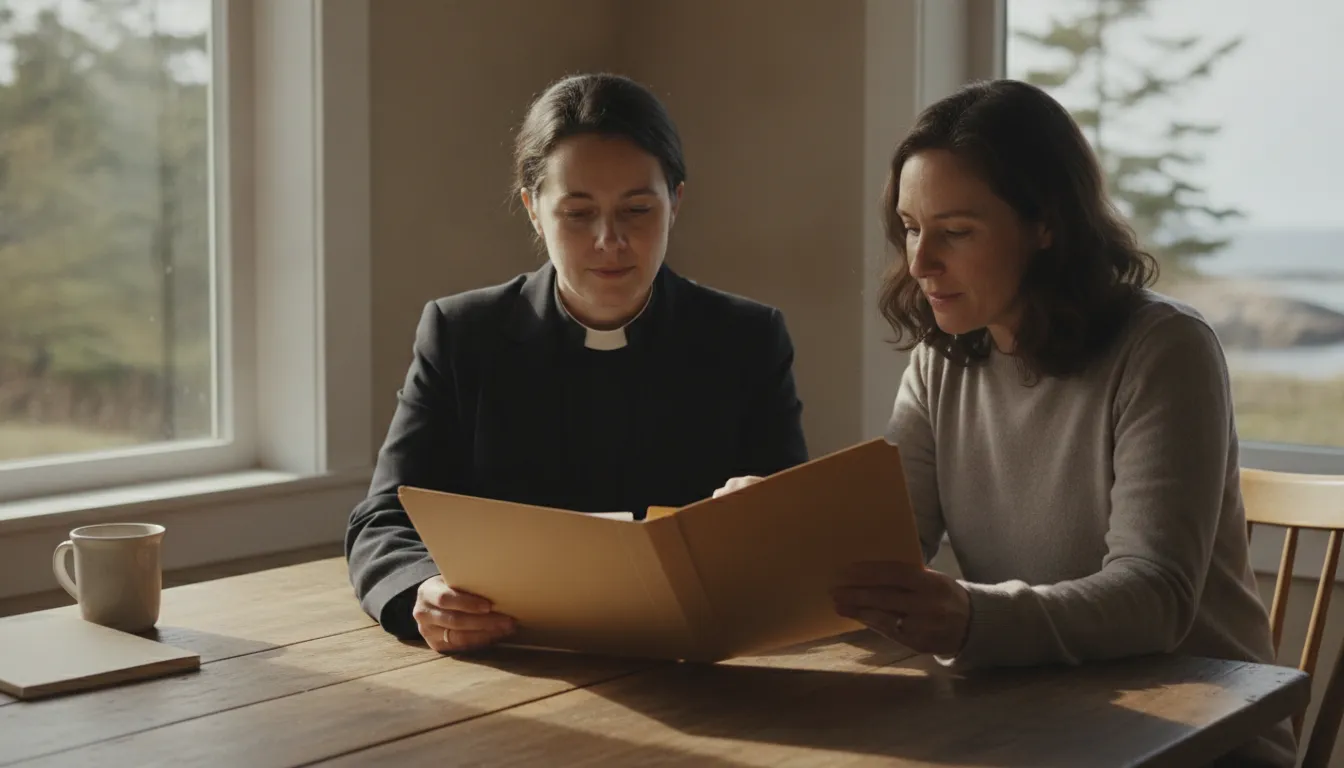
Once your authority is clear, prepare the ceremony as a minister, not as a clerk. All Faith Ministry ordains you and gives you a place to learn the role. Maine still expects the solemnization itself to be done by someone the statute names, with a valid license from the couple.
Meet the couple before the date and ask who is filing the intentions. Confirm the town, the 90-day window, and that both people are 18 or older. Ask whether either person needs a divorce decree or a death certificate for a prior marriage. You are not the clerk, so you do not collect those records for the state, but you should not stand in front of guests if the license is missing.
Plan a service that fits the people in front of you. All Faith Ministry ministers serve across backgrounds, which is why the ministry is built for more than one tradition. Keep the language respectful. Do not promise a legal result you have not verified. If a family wants a religious blessing and a civil signing, say which part you are performing and under which kind of authority.
On the day, bring your ordination credential in a form you can show without digging through email. If you also hold a Maine marriage officiant license, bring that too, and do not mix the two documents up when someone asks what they prove. Arrive early enough to read the license. Check the names against the identification the couple brought. Sign only where the form asks the officiant to sign, and return it the way that clerk requires.
After the ceremony, write down the date, the town, and where you sent the license. That note helps if a question comes back months later. It also belongs with the broader work of ministry. Training is available if you want more practice before you take paid ceremonies. The wedding officiant training page is the place to start that skill-building. It does not replace the Maine statute.
If a detail in this guide conflicts with a newer statute, rule, or clerk instruction, follow the official source. Laws change. Re-read Title 19-A, section 655, and Title 5, sections 90-G and 86. Also re-read the Secretary of State officiant page and the Maine CDC marriage page.
Which questions should you review before you apply?
Before you apply, write down the questions a Maine clerk or a couple is likely to ask, and answer them from the statute rather than from memory. All Faith Ministry can confirm your ordination. Only Maine can confirm how that ordination is used at a wedding.
- Are you seeking ministerial ordination, a resident marriage officiant license, or a one-ceremony temporary registration? These are different filings.
- Do you live in Maine? Residence decides whether section 90-G is even available to you.
- Are you already a Maine notary? Since July 1, 2023, the notary commission itself is not marriage authority.
- Which document will you show: an All Faith Ministry ordination credential, a Secretary of State license, or a temporary registration certificate?
- Does the couple have a marriage license issued within the last 90 days, and are both parties 18 or older?
- Have you read Title 19-A, section 655, and the Secretary of State officiant page in the same week you plan to serve?
The where we serve page shows the broader ministry footprint, but a Maine ceremony still follows Maine law. After you are ordained, the minister responsibilities checklist covers duties that continue past the application. How long ministerial standing lasts is a different question, covered in the ordained minister license guide. A Maine section 90-G license is a 7-year state license. Do not treat that term as the expiration date of an All Faith Ministry ordination.
Review Maine ordination information
Frequently asked questions
Can I become an ordained minister in Maine online?
Yes. You can become an ordained minister online through All Faith Ministry without living in Maine first. Your ordination is ministerial standing. Whether you may solemnize a marriage still depends on Title 19-A, section 655.
Does an ordained minister need a separate Maine license?
An ordained minister of the gospel is already listed in section 655, whether a resident or not. The marriage officiant license under Title 5, section 90-G, is a different authority for qualifying Maine residents. It is not a second copy of your ordination certificate.
How long does a Maine marriage officiant license last, and what does it cost?
A license issued under section 90-G is for a term of 7 years. Title 5, section 86, sets a $25 fee to file a new or renewal marriage officiant application. Notaries who receive the license through their Maine notary commission are treated separately, and the Secretary of State says that license is free unless they opt out.
Can a nonresident officiate one wedding in Maine without being ordained?
Only if they already have authority to perform civil marriages in their home state and Vital Records issues a temporary registration certificate. The statute requires proof of that authority, a copy of the home-state statute, the couple's names and residences, the expected date, and a $100 fee. The certificate covers only that marriage.
How long is a Maine marriage license valid?
Maine Vital Records says the license the clerk issues after intentions are filed is good for 90 days. Intentions use the VS2-A form, and parties under 18 may not marry in Maine.
Learn more about Maine ordination information
Have a question about your own ordination record? Contact All Faith Ministry and we will help you sort the credential questions we can answer. For a ruling on your filing, ask the Secretary of State or a Maine attorney.