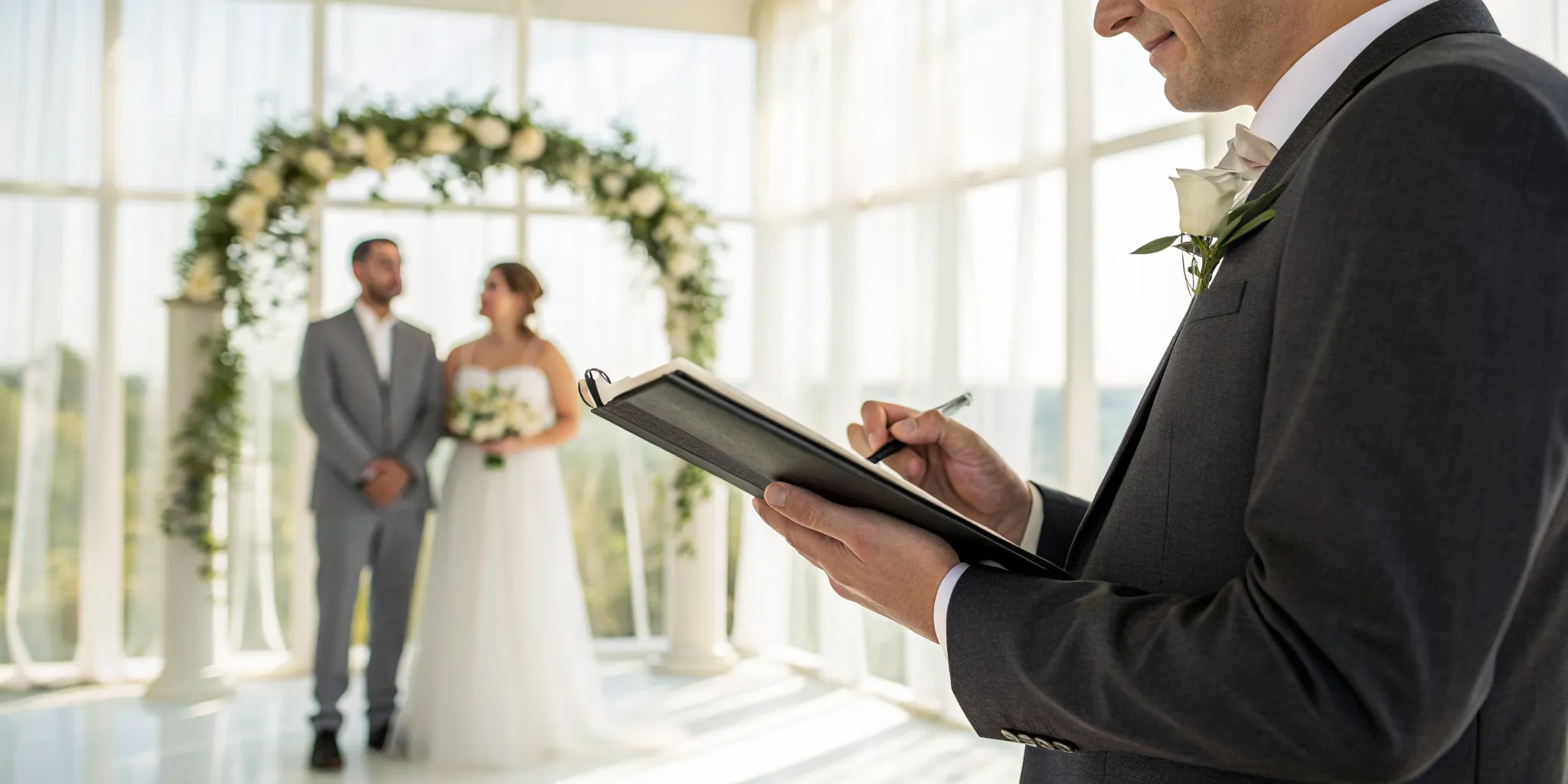

You’ve heard them in movies and at family weddings: "To have and to hold, from this day forward." These phrases are so familiar they can almost lose their impact. But for a wedding officiant, understanding the profound depth behind these words is critical. These aren't just lines to recite; they are solemn promises with a rich history. Exploring the origins and true meaning of traditional wedding vows transforms you from someone who simply reads lines into a guide who can convey their full weight and beauty. This article will give you the context you need to deliver these classic promises with the reverence they deserve.
Key Takeaways
- Master the Classics: Learn the history and meaning behind traditional vows from various cultures so you can explain their significance to couples and deliver these powerful words with confidence and respect.
- Facilitate Personalization: Guide couples to create meaningful vows by blending traditional elements with their unique stories, quotes, or memories, all while ensuring the ceremony's legal requirements are fulfilled.
- Set the Stage for the Vows: Your most important job is to create a calm, supportive environment for the vow exchange; by setting a reverent tone and helping couples find their words, you ensure this moment is the heartfelt centerpiece of the ceremony.
What Are Traditional Wedding Vows?
Traditional wedding vows are the classic, time-honored promises couples exchange during their ceremony. Think of the iconic phrases you’ve heard in movies and at family weddings for generations. These aren't just poetic words; they are powerful declarations that have been spoken by millions, connecting a new marriage to a long history of commitment. For many couples, choosing traditional vows is a way to ground their union in something enduring and universally understood. As an officiant, you will guide couples through these profound promises, so it’s important to appreciate their history and significance. Understanding the foundation of these vows is a key part of your role in creating a meaningful ceremony.
Their role in the ceremony
Traditional vows are the heart of the wedding ceremony. They represent the moment when two people publicly and formally declare their commitment to one another. In many religious and civil traditions, these specific words are what legally and spiritually bind the couple. For some, the vows are a sacred covenant with wording that cannot be changed. This is the climax of the event, the reason everyone has gathered. Your role as the officiant is to create the space for these promises to be made, ensuring the couple and their guests feel the weight and beauty of the moment. The vows are a declaration of intent, a crucial component that satisfies the legal requirements for marriage in many states.
Why these words still matter
In an age of personalization, you might wonder why so many couples still choose vows written centuries ago. The answer lies in their profound and time-tested meaning. Traditional vows carry the weight of history, offering a sense of seriousness and permanence that can be deeply comforting. These words have been tested by time and found to perfectly capture the core promises of marriage. For many, speaking the same vows that their parents and grandparents did creates a powerful link between generations. Your wedding officiant training will prepare you to honor this choice, helping you deliver these classic lines with the sincerity and reverence they deserve, making the moment unforgettable for the couple.
The History of Traditional Vows
Wedding vows have a rich and fascinating history, evolving from rigid, sacred pacts into the diverse promises we hear today. For centuries, these words were the unchanging heart of the wedding ceremony, representing a couple's solemn commitment to each other and their community. As an officiant, understanding this journey from ancient tradition to modern personalization will help you guide couples in choosing vows that are meaningful for them. It’s about appreciating where these powerful words came from and recognizing the freedom couples now have to make them their own. This historical context gives you the foundation to help create a ceremony that feels both timeless and deeply personal.
From sacred covenants to modern promises
Traditional wedding vows are steeped in history, with roots stretching back hundreds of years. These weren't just sweet nothings; they were considered sacred covenants. For centuries, these words represented a solemn and binding promise made before God and the community. The language was serious because the commitment was seen as unbreakable, a cornerstone of social and religious life. As an officiant, understanding this weight helps you appreciate why some couples still choose these powerful, time-honored words. It’s a tradition built on a profound sense of duty and devotion, a concept that aligns with the integrity we encourage in our Code of Ethics.
How vows have changed over time
While the core sentiment of commitment remains, the specific wording of vows has certainly evolved. In some very traditional religious ceremonies, the words are set in stone and cannot be altered for legal and doctrinal reasons. However, many other traditions have seen a gradual shift. The formal, almost poetic language of older vows (think "thee" and "thou") has often been updated to reflect how we speak today. This evolution shows a beautiful flexibility, allowing the institution of marriage to remain relevant across generations. It's also a reminder for officiants to be aware of the specific state laws that might dictate what parts of a ceremony are legally required.
The modern move to personalize vows
These days, many couples want their ceremony to feel uniquely theirs. This has led to a popular trend of personalizing vows, whether that means writing them from scratch or adapting traditional examples. It’s a way for couples to express their specific promises and share a glimpse into their relationship with their guests. Your role as an officiant is to guide them through this process. You can help them find the right balance between time-honored tradition and personal expression. Learning how to support couples in crafting meaningful vows is a key skill you’ll develop through our comprehensive wedding officiant training.
Examples of Traditional Wedding Vows
As an officiant, you'll encounter couples from all walks of life, and familiarizing yourself with vows from different cultures and religions is a wonderful way to honor their backgrounds. While some couples will write their own promises, many will draw inspiration from these timeless words. Understanding the meaning behind them helps you deliver the ceremony with the respect and intention it deserves. Let's look at some of the most common traditional vows you might come across.
Christian and Catholic vows
This is likely the structure you’re most familiar with, as it’s often portrayed in movies and television. In Christian traditions, the vows are a cornerstone of the ceremony, representing a lifelong covenant before God. The classic phrasing, "I, (name), take you, (name), to be my husband/wife, to have and to hold from this day forward, for better, for worse, for richer, for poorer, in sickness and in health, to love and to cherish, till death do us part," is a powerful declaration. It covers the full spectrum of life’s potential challenges and joys, framing the marriage as an unbreakable, unconditional bond.
Jewish vows
In a Jewish wedding ceremony, the exchange of rings is accompanied by a beautiful and ancient declaration. The groom traditionally says to the bride, "Harei at mekudeshet li b'taba'at zo k'dat Moshe v'Yisrael," which translates to, "Behold, you are consecrated to me with this ring, according to the law of Moses and Israel." This single sentence is the central vow of the ceremony. It's not a list of promises but a powerful statement of sanctification, setting the relationship apart as sacred and holy. It’s a profound moment that legally and spiritually binds the couple together.
Hindu vows
Hindu wedding vows are beautifully woven into a ritual called the Saptapadi, or the "Seven Steps." As the couple takes seven steps together, often around a sacred fire, they recite a unique vow with each step. These vows are not just promises to each other but prayers for their shared future. They ask for blessings like providing for their family, developing physical and spiritual strength, sharing in joy and sorrow, and remaining lifelong friends. This active, symbolic exchange makes the vows a deeply engaging and meaningful part of the ceremony, representing the journey they are beginning together.
Muslim vows
In an Islamic wedding ceremony, known as the Nikah, the vows are typically simple, direct, and heartfelt. The core of the ceremony is the proposal (Ijab) from one party and the acceptance (Qabul) from the other, which must be stated clearly in front of witnesses. For example, the groom might say, "I take you as my wife according to the rules of the Holy Quran and the Prophet." The bride then gives her consent. The vows emphasize mutual respect, love, and the importance of faith as the foundation of their partnership, creating a clear and willing agreement between the two individuals.
Buddhist vows
Buddhist wedding vows are less about rigid tradition and more about shared intentions and principles. They often focus on the couple's commitment to supporting each other's spiritual journey and cultivating a deep, compassionate partnership. A couple might promise to develop their hearts and minds, to use challenges as opportunities for growth, and to nurture a love based on understanding and kindness. These vows reflect core Buddhist teachings, framing the marriage as a path to mutual awakening and a source of happiness not just for the couple, but for all beings their relationship touches.
Nondenominational and secular vows
For couples who aren't following a specific religious tradition, the vows are a chance to create something that truly reflects their unique relationship and shared values. While there's no set formula, these vows often include promises to love, honor, and support one another through all of life's adventures. They might incorporate personal stories, inside jokes, or quotes that are meaningful to them. This is where your guidance as an officiant is invaluable. Our wedding officiant training can give you the tools to help couples craft personal promises that feel authentic and heartfelt, making their ceremony truly one-of-a-kind.
Deconstructing the Classics: What Traditional Vows Really Mean
As an officiant, you'll hear these phrases countless times. But do you know what they truly mean? These classic vows are more than just familiar lines; they are profound promises that have shaped the institution of marriage for centuries. Understanding the depth behind each phrase will not only enrich the ceremonies you perform but also help you guide couples as they choose the words that will define the start of their new life together. Let's look at the meaning packed into these timeless promises.
"To have and to hold, from this day forward"
This beautiful phrase marks the official beginning of the couple's shared life. It’s a promise of deep intimacy and connection that goes far beyond the physical. "To have" signifies a commitment to truly know one another, sharing every part of their lives. "To hold" is a pledge to care for, protect, and cherish each other. It’s about creating a safe space where both partners can grow and be supported. This line isn't just about possession; it’s about a mutual, tender, and protective bond that starts at that very moment and continues forward.
"For better, for worse, for richer, for poorer"
Life is unpredictable, and this vow is a direct acknowledgment of that reality. It’s a powerful promise of unwavering loyalty, no matter what circumstances arise. Committing to someone "for better, for worse" means celebrating the triumphs together and standing strong during the inevitable challenges. The "richer, for poorer" part extends this promise to financial stability and hardship. It reinforces the idea that the marriage is a partnership that transcends material wealth or difficult times. This vow is the couple’s declaration that their love is the constant they can rely on.
"In sickness and in health, till death us do part"
This is perhaps the most solemn and powerful line in traditional vows. It speaks to the permanence of the marriage commitment. Promising to love someone "in sickness and in health" is a pledge to be a caregiver, a source of comfort, and a steady presence through all of life's physical and emotional states. The final phrase, "till death us do part," solidifies the intention for the marriage to be a lifelong union. As an officiant, you are witnessing a promise meant to last a lifetime, a responsibility that our Code of Ethics helps you uphold with integrity.
The enduring power of these phrases
There’s a reason these vows have been used for centuries. They carry a certain gravity and historical weight that can be difficult to capture in self-written vows. Their language is simple, yet the promises are immense. For many couples, speaking these words connects them to generations of couples who came before them, grounding their ceremony in a rich tradition. Our wedding officiant training helps you appreciate this history, so you can guide couples in understanding the profound commitment these classic phrases represent, whether they use them as-is or as inspiration for their own words.
How Vows Reflect Cultural Values
Vows are so much more than just a romantic highlight of the wedding day. They are a window into a culture's deepest beliefs about love, partnership, and family. The words a couple chooses to say, whether ancient or brand new, are packed with meaning that has been shaped by history, religion, and social norms. As an officiant, understanding this context is one of your most powerful tools. It allows you to guide couples with sensitivity and help them craft a ceremony that feels authentic and deeply resonant. When you know the 'why' behind the words, you can help make their promises even more powerful.
Promises of commitment and fidelity
Traditional vows are built on a foundation of serious, lifelong promises. Phrases like "to have and to hold" aren't just poetic; they are declarations of unwavering commitment. For centuries, these vows have been used because they "hold deep meaning and show a strong promise." They communicate that marriage is a stable, enduring partnership meant to last a lifetime. This emphasis on permanence and fidelity is a core value in many cultures. When you officiate a wedding, you are witnessing and validating this profound pledge. Recognizing the weight of these promises helps you hold the space for the couple with the gravity and respect it deserves.
The influence of religion on vows
For many couples, marriage is a sacred act, and their vows reflect this. Religious vows are often seen as a three-way covenant between the couple and their higher power. The classic vow from the Church of England, for example, concludes with the phrase, "according to God’s holy law. In the presence of God I make this vow." This single line transforms the promise from a personal pledge into a holy ordinance. It adds a layer of spiritual accountability and divine blessing to the union. As an officiant, respecting these deeply held beliefs is paramount, and our Code of Ethics emphasizes this responsibility to honor every couple's unique spiritual path.
Gender and family expectations in vows
Vows also tell a story about a culture's expectations for partners and families. Historically, some vows included a promise for the wife "to obey" her husband, reflecting a patriarchal view of marriage. Today, many couples consciously update this language to reflect a more egalitarian partnership. This is a perfect example of how vows evolve with cultural values. Helping couples with these choices is a key part of your role. Our wedding officiant training gives you the skills to guide couples in blending tradition with their personal values, ensuring their vows truly represent their unique bond and their vision for the future together.
How to Personalize Traditional Vows
Many couples love the weight and history of traditional vows but also want the ceremony to reflect their unique relationship. As an officiant, you can guide them in blending the classic with the personal. This isn’t about throwing out tradition; it’s about making it their own. Your role is to help them find the perfect balance, creating a moment that feels both timeless and deeply personal. By offering thoughtful suggestions, you can help couples craft vows that honor their commitment in a way that is authentic to them.
Decide what to keep and what to change
The first step is often the simplest: have the couple read through traditional vows and see what resonates. Encourage them to think of it not as an all-or-nothing choice, but as a starting point. They might find that certain phrases, like "to have and to hold," feel essential, while others don't quite fit their relationship. It's perfectly fine to use or change existing examples. You can suggest they highlight the parts they love and set aside the parts they don’t. This simple exercise helps them take ownership of their ceremony and begin to see how their personal story can be woven into the fabric of tradition.
Know the legal considerations
Before a couple gets too creative, it’s your job to make sure the legal bases are covered. While most of the ceremony can be personalized, the "Declaration of Intent" is the part that makes the marriage legally binding. This is typically the "I do" portion of the ceremony. The specific requirements can vary, so it's essential to be familiar with the state laws where the wedding is taking place. Once you confirm the required legal declarations are included, the couple is free to customize the rest of their vows. This clarity gives them the confidence to be creative without worrying about the legal validity of their marriage.
Blend tradition with personal promises
Couples don’t have to choose between classic vows and writing their own. A beautiful approach is to blend the two. They can recite a traditional line and then follow it with a personal promise that adds context and meaning. For example, after saying, "for better, for worse," one partner might add, "I promise to celebrate your wins as if they were my own and hold your hand through every challenge." This method allows couples to incorporate traditional vows while adding a layer of intimacy that is uniquely theirs, creating a powerful and moving exchange.
Weave in poetry, quotes, or memories
To make the vows even more personal, encourage the couple to think about other sources of inspiration. Meaningful song lyrics, lines from a favorite poem, or even a funny inside joke can be woven into their promises. Some couples might prefer to include these as a separate reading, while others will want to integrate them directly into their vows. Our wedding officiant training covers how to help couples find these personal touches. By prompting them with questions about their relationship, you can help them unearth beautiful details that will make their ceremony unforgettable for them and their guests.
Your Role as an Officiant: Guiding Couples Through Their Vows
As the wedding officiant, you are the steady hand guiding the couple through the most meaningful part of their ceremony: the vows. This is more than just reading lines from a page; it’s about creating a space where two people can make a profound commitment to each other. Your role is to be a calm, supportive presence, helping them articulate their promises and setting the stage for a moment they will remember for the rest of their lives.
Many couples, especially those writing their own vows, can feel overwhelmed. They want to find the perfect words to express a lifetime of love, and the pressure can be intense. You have the beautiful opportunity to ease that anxiety and help them create something that is authentic and heartfelt. By preparing yourself for this responsibility, you ensure the vow exchange is the emotional centerpiece it’s meant to be.
Help couples find the right words
One of your most important jobs is to help couples articulate their love and commitment. Many people aren't natural writers and may not know where to begin. You can be an invaluable resource by providing encouragement and structure. Suggest that they start by jotting down memories, inside jokes, and the qualities they admire most in each other.
Encourage them to look at vow examples not as templates to copy, but as a source of inspiration. As the experts at Young Hip & Married suggest, couples can "mix and match parts from different vows, change words, or add your own personal touches." Remind them that their vows don't have to be perfect literary masterpieces. They just need to be honest and come from the heart.
Set the tone for the vow exchange
The vow exchange is the climax of the wedding ceremony. Your delivery and demeanor are key to setting the right tone for this sacred moment. Before the couple begins, take a deep breath and speak slowly and clearly. Your calm presence will help ground them and their guests, signaling that something truly important is about to happen.
Introduce the vows by briefly explaining their significance. This isn't just a tradition; it's a public declaration of their lifelong promises. As The Church of England notes, the wedding vows are the most important part of the wedding day. By treating this moment with the reverence it deserves, you help the couple and everyone present fully appreciate the weight and beauty of the commitment being made.
How officiant training prepares you for this moment
Guiding a couple through their vows is a skill, and like any skill, it can be learned and refined. Comprehensive wedding officiant training gives you the confidence and tools to handle this responsibility with grace. Through training, you learn how to structure a ceremony, manage your public speaking, and, most importantly, provide meaningful support to the couple.
This preparation allows you to do more than just lead the ceremony; it equips you to help couples reflect on the promises they are about to make. Some officiants offer pre-marital sessions to discuss the meaning behind the vows, helping couples understand the depth of their commitment before the big day. This thoughtful preparation ensures you can be the reassuring, professional, and heartfelt guide every couple deserves.
Related Articles
- Tips for New Officiants to Create Memorable Wedding Moments
- Modern Wedding Ceremony Script: A Complete GuideFixed Button CSSFixed Button CSS
- Your Complete Non-Denominational Wedding Officiant ScriptFixed Button CSSFixed Button CSS
Frequently Asked Questions
What's the best way to advise a couple who can't decide between traditional vows and writing their own? This is a common situation, and the great news is that they don't have to choose. I often suggest a blended approach. Encourage them to start with a traditional vow structure they like and then add a personal promise after each classic line. This gives them the weight of tradition and the intimacy of a personal story. It’s your job to help them see it not as an all-or-nothing decision, but as an opportunity to create something that feels both timeless and uniquely theirs.
How can I help a couple who is nervous about reciting their vows in public? Your calm presence is your most powerful tool. Remind them that it’s completely normal to feel nervous. You can ease their anxiety by suggesting a "repeat after me" format, breaking the vows into short, manageable phrases. Also, make sure they have a printed copy of their vows with them. Just knowing the words are there can provide a huge sense of relief, even if they never look at them. Your role is to be their steady anchor during one of life's biggest moments.
Are there specific words a couple must say for the marriage to be legal? Yes, this is a crucial detail. While most of the ceremony is flexible, every state requires a "Declaration of Intent." This is the part where the couple clearly expresses their intention to marry, which is often the "I do" exchange. The exact wording can vary, so it's essential to confirm the legal requirements for the state where the ceremony is taking place. Once that legal declaration is included, the couple has complete freedom to personalize the rest of their promises.
A couple wants to use traditional vows but finds some of the language outdated. How can I help them? This is a great opportunity to help them make the ceremony their own. Reassure them that updating vows is very common and a wonderful way to reflect their modern partnership. You can work with them to find synonyms that feel more authentic. For instance, a promise "to obey" can easily become a promise "to respect" or "to support." The goal is to preserve the original meaning of the commitment while using words that the couple can say with complete sincerity.
I'm officiating for a couple from a different religious background. How can I respectfully handle their vows? The key is to approach it with curiosity and respect. Have an open conversation with the couple about what their traditional vows mean to them. Ask them to walk you through any rituals and to help you with the correct pronunciation of any unfamiliar words. Your willingness to learn and honor their traditions is a gift to them. Viewing it as a privilege to participate in their culture will help you deliver their vows with the authenticity and reverence they deserve.