




Becoming a minister in Michigan involves more than receiving an ordination certificate. You also need to understand how Michigan law describes religious officiants, what records you may need to maintain, and how the marriage-license process reaches you before you serve. That preparation helps you approach ministry with confidence while respecting the limits of what an ordination provider can promise.
Ready to become an ordained minister in Michigan? Learn about All Faith Ministry's ordination path.
An ordained minister in Michigan is a minister, cleric, or religious practitioner who is ordained or authorized to solemnize marriages according to the usages of the denomination, as described in Michigan law. All Faith Ministry provides online ordination and officiant training, but you should verify current state and county practices before serving.
The role can be meaningful for someone supporting a loved one or building professional officiant skills. Start by clarifying what ordination means in practice, then connect that foundation to Michigan's specific legal framework and responsibilities.
.What Is an Ordained Minister in Michigan?
Answer: An ordained minister in Michigan is a person recognized by a religious organization or tradition to carry out ministry responsibilities. Depending on the person's authorization and the applicable law, that role may include solemnizing marriages. All Faith Ministry provides online ordination and training, but each minister must verify Michigan requirements before serving.
Ordination is a form of religious or ministerial recognition. It can reflect a person's commitment to serve others, provide spiritual support, or develop a professional officiant practice. The exact meaning of ordination varies among denominations and ministries, so an aspiring minister should understand what organization is granting the ordination, what credentials it provides, and what responsibilities come with using them.
Officiant work is related, but it is not identical to ordination. An ordained person may be interested in officiating, yet ordination by itself should not be treated as a blanket legal guarantee. In Michigan, the marriage-solemnization statute refers to a minister, cleric, or religious practitioner who is ordained or authorized to solemnize marriages according to the usages of the denomination. The statute also says that an authorized person must keep proper records and return licenses and certificates as required by law. Read the Michigan statute and confirm current procedures before accepting an assignment.
That Michigan-specific language matters because legal authority can depend on more than a certificate stored in a digital account. You need to know how your ordaining organization describes your authorization, how Michigan law applies to your situation, and whether the relevant county clerk has additional guidance. For broader context, review these state ordination requirements without assuming that another state's process controls in Michigan.
All Faith Ministry describes itself as an online ordination and wedding officiant training organization. Its educational resources address state-specific legal requirements and compliance, along with professional preparation. That support can help you identify questions and prepare responsibly, while the final responsibility for confirming your authority remains with you and the appropriate Michigan sources. With that distinction clear, the next step is understanding how to pursue ordination and prepare for ministerial work.
How to Become an Ordained Minister in Michigan
All Faith Ministry helps people pursue online ordination and build practical officiant skills, but becoming prepared to serve in Michigan involves more than receiving a credential. You should choose a ministry direction, understand the provider's process, review Michigan's current rules, and organize records that demonstrate your authority and responsibilities.
- Choose the ministry path that fits your purpose. Decide whether you are seeking ordination for personal ministry, to serve people you know, or to develop professional officiant work. This choice can shape the education, ethical standards, public-speaking practice, and administrative preparation you want to complete. Before you become an ordained minister, identify the kind of service you intend to provide and the community you hope to serve.
- Apply through an organization whose role is clear. Review the organization's description of its ordination process, educational resources, and expectations. All Faith Ministry describes itself as an online ordination and wedding-officiant training organization with a digital-first service model. Read the terms carefully, provide accurate information, and keep a copy of your application or confirmation for your records.
- Complete relevant preparation and receive your credentials. Ordination credentials can help document your relationship with the organization that ordained you. They do not replace your responsibility to understand the law that applies where you serve. Consider wedding officiant training that addresses state-specific compliance, professional conduct, public speaking, and practical service. When your credentials are issued, save the digital and printable versions in separate secure locations.
- Review Michigan requirements before accepting an assignment. Michigan law includes a category for a minister, cleric, or religious practitioner who is ordained or authorized to solemnize marriages according to the usages of the denomination. That language should be evaluated against your circumstances and the current statute, not assumed from a provider's general statement. Use the guide to online ordination credentials alongside current state ordination requirements, and confirm any county-specific questions with the appropriate clerk.
- Prepare records and a repeatable administrative process. Keep your ordination certificate, credential details, organization contact information, and any training records together. Before serving, clarify how you will receive the marriage license, complete required records, and return documents as required. Michigan law places recordkeeping and license or certificate duties on an authorized person, so treat those responsibilities as part of ministry preparation rather than an afterthought.
The practical path is to establish your ministry purpose, apply with a clearly identified organization, retain proof of ordination, and verify Michigan rules before serving. All Faith Ministry can provide online ordination and educational resources, while the minister remains responsible for confirming current legal requirements and local administrative expectations.
Can an Online-Ordained Minister Legally Officiate in Michigan?
Answer: All Faith Ministry can provide online ordination and educational resources, but an online credential is not, by itself, a blanket legal guarantee. Michigan law recognizes a minister, cleric, or religious practitioner who is ordained or authorized to solemnize marriages according to the usages of the denomination. Confirm that your ordination fits that statutory condition and check current county practice before accepting an assignment.
Michigan's primary rule appears in MCL 551.7. It lists a minister, cleric, or religious practitioner who may solemnize marriages statewide when ordained or authorized under the usages of the denomination. The statute also addresses a nonresident minister who is authorized under the laws of the state where that minister resides.
What the statutory condition means
The important point is the combination of status and authority. Calling yourself a minister, completing an online course, or holding a certificate does not automatically answer every legal question. You should be able to identify the ordaining organization, retain evidence of your ordination or authorization, and understand how the organization describes your authority. Provider statements should be treated as service information, while Michigan law remains the controlling source for Michigan legal requirements.
For a broader comparison of jurisdiction-specific rules, review All Faith Ministry's guide to state ordination requirements. That resource can help you identify questions to ask, but it should not replace the current Michigan statute or advice from the relevant county office.
Keep records and verify local practice
MCL 551.7 also requires a person authorized to solemnize a marriage to keep proper records and return licenses and certificates as required by law. This is a legal responsibility, not merely an administrative preference. Before serving, ask the county clerk what documentation or process the office currently expects from an officiant, especially if your ordination was completed online or you live outside Michigan.
County staff may explain current filing practices, but their guidance does not turn an unsupported provider claim into statutory authority. Keep your credentials accessible, confirm the license-handling obligations, and avoid representing that you are authorized until the relevant requirements are clear. Michigan law can also change, so review the Legislature's current text rather than relying only on an older article, certificate, or informal answer.
What Documents Should a Michigan Minister Keep?
A well-organized record file helps an ordained minister in Michigan answer questions about authority and complete required administrative duties. Keep your proof of ordination, current credentials, and any supporting letter or documentation issued by the religious organization that ordained or authorized you.
It is also wise to keep a secure record of each marriage license you receive, the completed certificate, and the date you returned the required materials. Store originals safely and maintain copies only where permitted, because marriage records contain personal information.
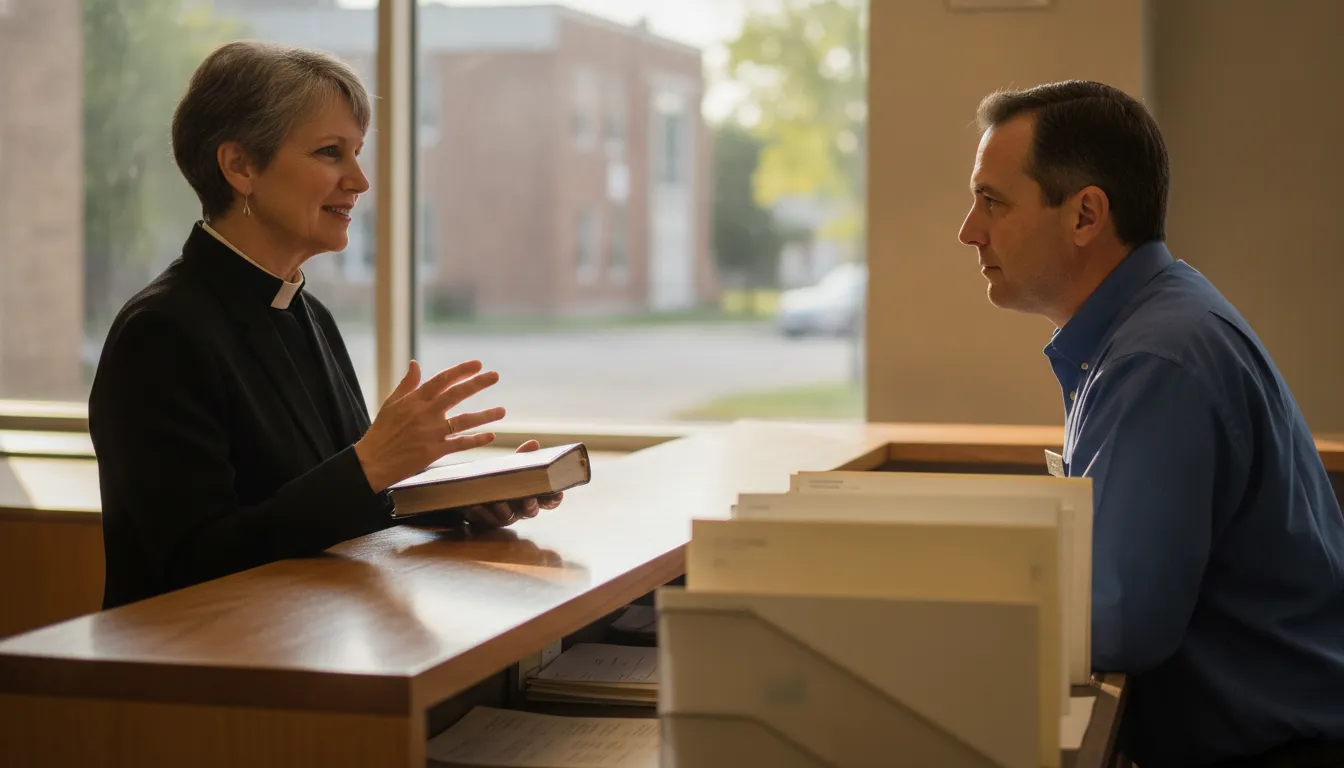
Answer: All Faith Ministry helps people prepare for ministry by providing online ordination resources and credential documentation. A Michigan minister should keep those materials available, then separately follow Michigan's rules for receiving, completing, recording, and returning marriage documents. Credentials support verification, but they do not replace checking current state or county requirements.
Proof of ordination and credentials
Keep your ordination certificate or other proof of ordination, along with a wallet credential or letter of good standing if your ordaining organization provides one. These documents can help establish your ministerial status when a clerk, couple, or another authority asks for verification. For a deeper explanation of credential types, see this guide to online ordination credentials.
Before serving, review the legal online ordination guide and confirm how the relevant county handles verification. Michigan law identifies an ordained or otherwise authorized minister, cleric, or religious practitioner as eligible to solemnize marriages under the applicable statutory condition. The statute also requires an authorized person to keep proper records and return licenses and certificates as required by law. See MCL 551.7.
Marriage license and certificate records
The parties must obtain the marriage license and deliver it to the officiant before the marriage can be performed. If both parties are Michigan residents, the license comes from the county where either resides. If both are nonresidents, it comes from the county where the marriage will occur. MCL 551.101 also sets out this delivery rule.
Michigan law says the county clerk provides the signed license and blank certificate to the applicant for delivery to the officiating person. After completing the required portions, keep a clear record of what you received and return the license and certificate through the required process. Review MCL 551.103 and confirm current county instructions before serving.
Who Handles the Marriage License in Michigan?
Answer: All Faith Ministry helps people prepare to serve as ministers, but the couple handles the marriage-license application with the county clerk. The clerk issues the signed license and blank certificate to the applicant, and the applicant delivers those documents to the officiant. The minister receives and returns the paperwork, while the county clerk manages issuance and recording.
Michigan law places the first step with the parties who intend to marry. When either person resides in Michigan, the couple obtains the license from the county clerk in the county where either person resides. When both applicants are nonresidents, they obtain it from the county where the marriage will take place. The governing rule is MCL 551.101.
| Applicant situation. | Where the couple obtains the license. | What the couple obtains. | What the officiant receives. |
|---|---|---|---|
| At least one applicant is a Michigan resident. | County clerk in the county where either applicant resides. | A completed and signed marriage license, plus a blank certificate. | The license and blank certificate, delivered before the marriage can be performed. |
| Both applicants are nonresidents. | County clerk in the Michigan county where the marriage will take place. | A completed and signed marriage license, plus a blank certificate. | The license and blank certificate, delivered before the marriage can be performed. |
What the minister is responsible for receiving
The applicant, not the minister, receives the license and blank certificate from the county clerk for delivery to the person who will officiate. Before proceeding, an ordained minister should confirm that the documents are complete and available. Michigan law also requires an authorized person who solemnizes a marriage to keep proper records and return licenses and certificates as required by law. See MCL 551.103 for the clerk's issuance and delivery duties.
The county clerk may require applicants to satisfy statutory requirements, including proof of age when requested. That is part of the couple's application process, not a substitute for the minister's own credential preparation. All Faith Ministry can help an aspiring minister organize ordination credentials and study relevant state requirements, but the minister should verify current instructions with the appropriate county clerk before accepting responsibility for a license.
How All Faith Ministry Helps Michigan Ministers Prepare
All Faith Ministry helps aspiring Michigan ministers prepare through online ordination, educational resources, and practical guidance for professional officiant work. Its materials address state-specific legal awareness, compliance, public speaking, and business development. That preparation can help you organize your responsibilities while leaving Michigan-specific legal questions to current statutes and the appropriate county office.
All Faith Ministry uses an online, digital-first model for ordination processing and education. This gives people a flexible way to learn about ministry and officiant responsibilities before accepting an assignment. To understand the broader path, start with the guidance on how to become an ordained minister.
Build practical officiant skills
Ordination is one part of preparing to serve. You also need to communicate clearly, manage details, respect the people you serve, and understand the boundaries of your role. All Faith Ministry's wedding officiant training covers areas such as public speaking, preparation, compliance awareness, and business development. These topics are relevant whether you expect to serve someone you know or develop professional officiant work.
Use legal awareness without assuming a guarantee
Michigan law identifies a minister, cleric, or religious practitioner who is ordained or authorized according to the usages of the denomination as an authorized marriage officiant. The statute also assigns recordkeeping and license-return responsibilities to authorized officiants. Because provider materials do not establish every Michigan qualification or county procedure, review current state law and confirm questions with the relevant county clerk. A broader guide to state ordination requirements can help you identify which details need local verification.
Follow ethical and professional standards
Preparation also includes deciding how you will serve responsibly. Review the All Faith Ministry officiant code of ethics for guidance on professional conduct, communication, and accountability. Keep your credentials organized, clarify what you are responsible for, and avoid presenting ordination as a substitute for checking Michigan's current rules. That approach supports both meaningful ministry and dependable professional practice.
What Should You Confirm Before Serving as a Michigan Minister?
Before serving, take a final moment to verify your documents, understand the local process, and identify what you are responsible for handling. A careful check can prevent avoidable confusion without treating a ministry provider's general guidance as a substitute for confirmation from the appropriate Michigan or county authority.
Answer: All Faith Ministry helps people prepare through online ordination and educational resources, but an ordained minister in Michigan should still confirm current credentials, applicable county procedures, license handling, and recordkeeping duties. Michigan law recognizes an ordained or properly authorized minister under the relevant denomination's usages, so verify the details that apply to your situation before serving.
- Check your credentials. Make sure your ordination record, certificate, and any supporting documentation are current, legible, and available in the format a county office or other authority may request. Keep secure digital copies and know where the originals are stored.
- Ask county-specific questions. Michigan law provides a statewide framework, but local offices may explain procedures differently. If you are uncertain about what a particular county clerk expects, contact that office directly. Do not assume that a provider's general explanation establishes a county's current practice.
- Confirm license delivery. Under Michigan law, the marriage license must be delivered to the officiant before the marriage can be performed. Make sure you know who will provide it and when you will receive it.
- Plan for records and certificate return. Michigan law requires a person authorized to solemnize a marriage to keep proper records and return licenses and certificates as required. Review the current statutory instructions and ask the issuing office about any practical handling questions.
If you are still organizing your preparation, review this Michigan ordination timeline as an adjacent planning resource. It covers timing and sequence, while this checklist focuses on being ready to serve responsibly.
Learn how to become an ordained minister with All Faith Ministry.
Frequently Asked Questions
Can you become an ordained minister online in Michigan?
Yes. All Faith Ministry provides an online ordination and education pathway for people preparing to serve as ministers or officiants. Review the credentials you receive, study Michigan's current requirements, and confirm any county-specific procedures before serving.
Can an online-ordained minister legally officiate a wedding in Michigan?
Michigan law recognizes a minister, cleric, or religious practitioner who is ordained or authorized to solemnize marriages according to the usages of the denomination. An online provider's statement alone is not a blanket legal guarantee, so verify your authority and current local practice before accepting an assignment. Michigan Compiled Laws 551.7
What are the requirements to officiate a marriage in Michigan as an ordained minister?
You should have valid ordination or authorization, understand the applicable Michigan rules, receive the marriage license before the marriage is performed, and complete the required records and certificate returns. Michigan law places these recordkeeping and return duties on the person authorized to solemnize the marriage. MCL 551.7
Do marriage officiants have to register with the state of Michigan?
Do not assume that an online ordination automatically completes every local or administrative requirement. The Michigan statute identifies who may solemnize a marriage and requires authorized persons to keep records and return licenses and certificates. Ask the relevant county clerk whether any additional verification or procedure applies to your situation. MCL 551.7
How do I get the documents needed to officiate a marriage in Michigan?
Keep your ordination certificate and other proof of authorization available, then ask the couple or county clerk about the current license workflow. The license and blank certificate are delivered to the person who will officiate, and the license must be delivered to that officiant before the marriage can be performed. MCL 551.103 and MCL 551.101
.Ready to Become an Ordained Minister in Michigan?
Learn how to become an ordained minister with All Faith Ministry and take your next step. Begin with current credentials, clear records, and Michigan-specific preparation.


