


Sooner or later, someone will ask you to serve communion — at a care home, a home group, a hospital bedside, a wedding, or a small congregation with no regular pastor. If you were ordained online to officiate weddings, this may feel like unfamiliar territory. The good news: learning how to officiate a communion service is far simpler than most people fear, and the essential elements have stayed the same for two thousand years. This guide walks through what communion is, how to prepare, a simple order of service you can adapt, and the practical details that make the moment meaningful.
Get ordained to serve your community
One thing before we begin: communion belongs to the church universal, and practices vary widely across traditions. What follows is an intentionally simple, ecumenical framework — adapt it to the beliefs of the people you are serving, and when in doubt, ask their home church how they receive it.
What Communion Is
Communion — also called the Lord's Supper or the Eucharist — is the bread-and-cup meal Jesus shared with his disciples on the night before his crucifixion and asked his followers to continue "in remembrance of me." Christians across nearly every tradition receive it as a means of remembering Christ's death, celebrating his resurrection, and experiencing unity with one another. The Catechism of the Catholic Church calls the Eucharist the source and summit of Christian life, and while different denominations describe what happens in the meal differently, the shape of it is shared: bread taken, thanks given, broken, shared, and the cup poured.
Because traditions differ on who may preside and how the meal is understood, officiating well starts with listening. Ask the host or organizer what their tradition does. A Catholic family at a graveside service, a nondenominational home group, and a mainline congregation will each expect something different — and honoring those expectations is part of serving them well.
Who Can Officiate Communion?
Practices here vary by tradition. Most Protestant and non-denominational settings welcome any mature believer to lead communion, ordained or not — though ordination adds recognized authority and preparation, especially in public settings like care facilities and memorial services. Catholic and Orthodox traditions reserve the Eucharist to their own ordained clergy entirely. If you serve across traditions — which our guide to interfaith ministry explores — the respectful rule of thumb is: lead communion where you are welcomed to lead it, and step back where the host tradition says otherwise.
Many online-ordained ministers officiate communion at weddings, graveside services, home churches, and chaplaincy visits. If you have not yet been ordained and want that recognition, it takes only a few minutes — see our guide to getting ordained to officiate ceremonies.
How to Prepare the Elements and the Space

Nothing about the table needs to be elaborate, but it does need to be intentional.
- The bread: a loaf, pita, matzo, or crackers all work. If you will break one loaf and share it, provide individual cups or sanitized handling to respect post-pandemic sensitivities.
- The cup: grape juice is standard in most Protestant contexts; wine where appropriate and legal. Offer individual small cups for larger or mixed groups.
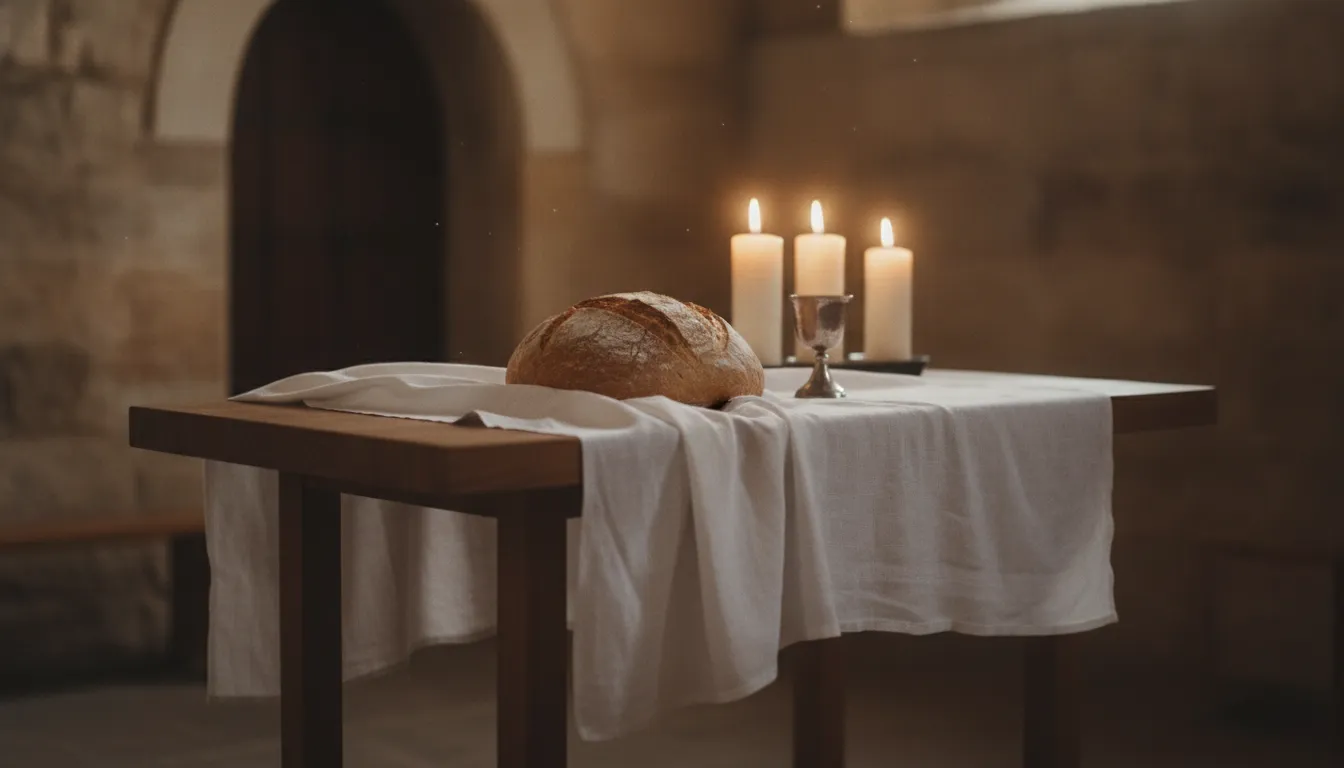
- The table: a clean cloth, the elements centered, maybe a candle. It should look cared for, not casual.
- The practical: know who will carry the elements to each person, have a plan for those who cannot come forward, and confirm any facility rules in advance — care homes, hospitals, and correctional facilities each have their own restrictions on food, drink, and handling.
Preparation is hospitality. When the table looks tended, the people around it know they are.
A Simple Order of Service
Most communion services, from a living room to a sanctuary, follow the same five movements. Here is a framework you can adapt in under fifteen minutes or expand to fill a full service:
| Movement | Purpose | Approximate Time |
|---|---|---|
| Gathering and welcome | Settle the room, state why you have come | 1–2 minutes |
| Scripture and reflection | Read the institution account; a brief word | 3–5 minutes |
| Prayer of thanksgiving | Bless the bread and the cup | 1–2 minutes |
| Sharing the elements | Distribute and receive together | 3–10 minutes |
| Closing prayer and blessing | Thank God, send people out in peace | 1–2 minutes |
The Words You Can Use
Officiants often worry about saying the right words. The words Jesus used, as recorded in 1 Corinthians 11:23–26, are the backbone of every communion liturgy in existence. A simple, faithful pattern:
"On the night he was betrayed, Jesus took bread, and when he had given thanks, he broke it and said, 'This is my body, which is for you. Do this in remembrance of me.' In the same way he took the cup after supper, saying, 'This cup is the new covenant in my blood. Do this, as often as you drink it, in remembrance of me.'"
Then pray in your own words: thank God for the bread and cup, for the life and death of Christ, and for the people in the room. Pray for the specific people present — the widow at the graveside, the residents of the care home, the couple whose wedding you are blessing. Specific prayer is the officiant's quiet superpower.
Distributing the Elements
Common patterns include: serving each person directly, passing trays down rows, inviting people to come forward to a table, or having households serve one another. Whatever you choose, say plainly what will happen — "The cups are in the trays; take one when it reaches you, and we will all receive together" — so no one feels lost. When everyone has received, return to the front for the closing prayer.
Officiating Communion in Special Settings
At Weddings
Some couples build communion into their ceremony as a family moment or a unity symbol. Keep it brief, coordinate with the venue on the table's placement, and explain to guests in one sentence what is happening. This is one setting where our wedding ceremony guides and communion preparation overlap naturally — the couple's faith language should shape how much of the service includes it.
At Memorials and Funerals
Communion at a funeral is a gift to grieving believers, but confirm it is welcome from the family and any officiating congregation first. Keep the words short; at memorials, presence does more than program. Our guide on serving as a funeral officiant covers how communion fits into a larger order of service.
In Care Homes, Hospitals, and Prisons
Institutions often welcome communion services but have rules: confirm visitor policies, element restrictions, and whether a chaplain must be present. Hospital and prison settings also raise confidentiality and safety considerations that our overviews of chaplaincy and starting a prison ministry walk through in detail.
The Scripture Passages Officiants Use Most
You do not need to memorize anything, but knowing the standard passages saves preparation time and gives you options for different rooms:
- 1 Corinthians 11:23–26 — Paul's account of the institution; the backbone of most liturgies and the safest all-purpose reading.
- Luke 22:14–23 — the Last Supper in narrative form; warmer and more story-driven, good for memorials and home settings.
- John 6:35 — "I am the bread of life"; a brief, resonant addition when the room needs comfort more than instruction.
- Revelation 3:20 — the table imagery of Christ at the door; a gentle closing note for evangelistic or mixed-faith settings.
Read the passage slowly — communion scripture is meant to be heard, not announced. If the service includes a talk or reflection, one to three minutes on the passage is plenty; the meal itself is the sermon. Print the passage in large type or read it from a well-worn Bible; either is fine, but know it well enough to look up while you read it.
Pastoral Sensitivities to Keep in Mind
Not everyone in the room will want to receive, and some should not be pressured to. Offer the elements without obligation: an open invitation with room to abstain is both theologically careful and pastorally kind. People who are ill may need only the cup or only the bread. Visitors from other traditions may quietly decline; that is normal and requires no comment. And if someone requests communion privately — a homebound member, a hospital patient — a brief, personal version of the service above is entirely appropriate.
Frequently Asked Questions
Do I need to be ordained to officiate communion?
In most Protestant and non-denominational contexts, no — any mature believer may lead it. Ordination adds recognized standing, which institutions like care homes and facilities often prefer. Catholic and Orthodox churches reserve their Eucharist to their own clergy.
Can communion be served outside a church building?
Yes. Communion is served in homes, hospitals, care facilities, parks, and prisons. The setting does not affect the meaning; preparation and pastoral care matter more than architecture.
How much bread and juice should I prepare?
A standard rule of thumb: one small piece of bread and one ounce of juice per person expected, plus about twenty percent extra for guests and second servings. Err on the generous side — running short feels worse than carrying a little home.
What if I make a mistake during the service?
No one has ever ruined communion by misreading a verse or pouring too much juice. The meal is about grace; extend some of it to yourself. Slow down, smile if it helps, and simply continue. The people in the room came to receive, not to judge, and they will remember the warmth far longer than any stumble.
The Table Is Ready When You Are
Learning how to officiate a communion service comes down to three commitments: know the story you are telling, prepare the table with care, and pay attention to the people in front of you. Get those three right and the service will land whether it is eleven people in a living room or a whole sanctuary. The elements are ordinary on purpose — the meaning is what makes them a meal to remember. If you are building out the ceremonies you can offer, communion pairs naturally with weddings, memorials, and baptisms, and each one widens the pastoral care you can give your community.