

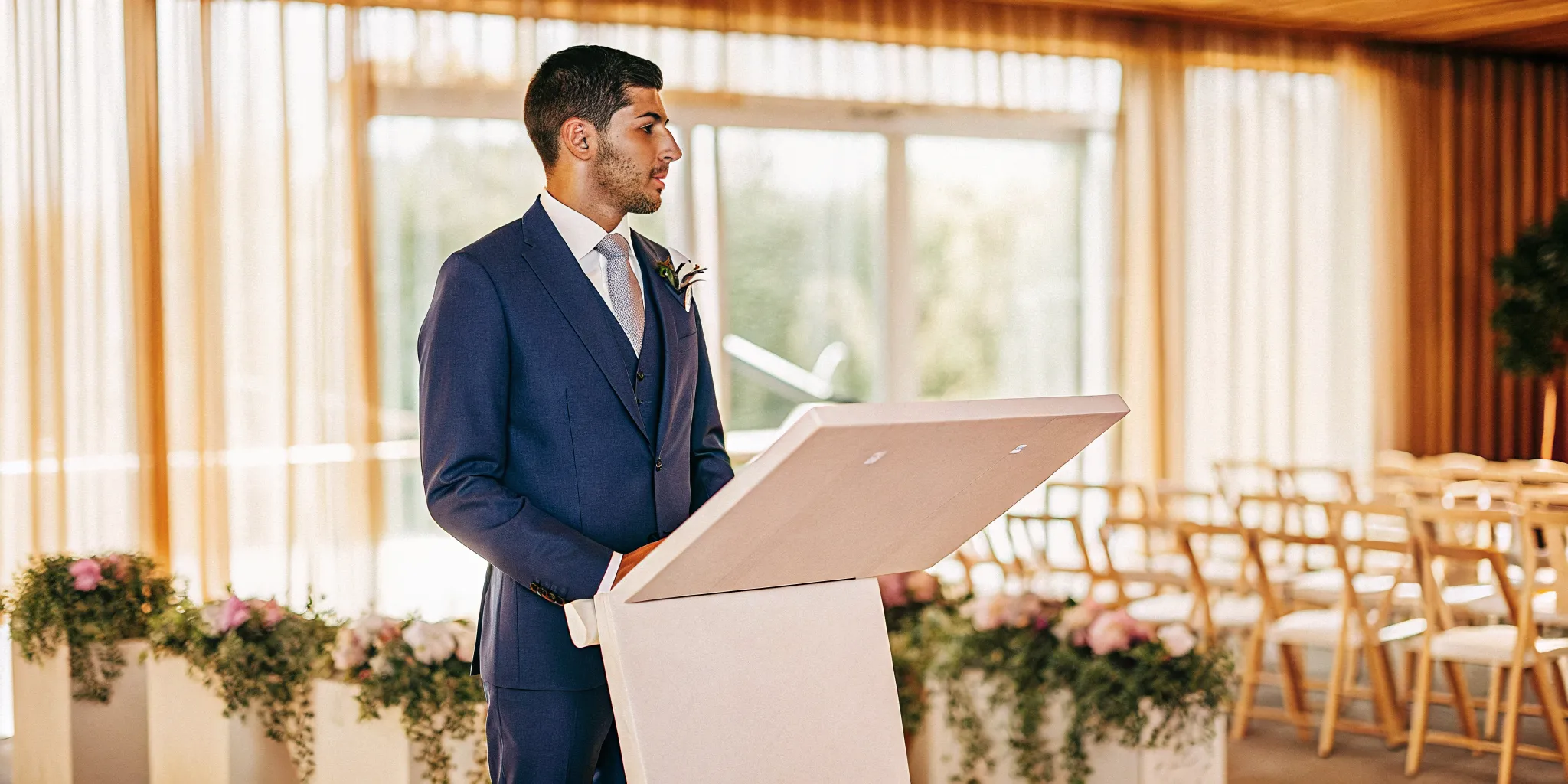

What if that fluttery, anxious feeling in your stomach wasn’t your enemy? The physical sensations of nervousness are nearly identical to those of excitement: a rush of adrenaline, a faster heartbeat, and heightened awareness. The only difference is the story you tell yourself about them. Instead of trying to crush your anxiety, you can learn to channel it into positive energy that makes your delivery even more powerful and sincere. This guide will show you how to reframe your thinking and make your nerves work for you. You’ll learn how to handle nerves not by fighting them, but by transforming them into the focus and passion needed to lead a truly memorable ceremony.
Key Takeaways
- Embrace nerves as a sign you care: Recognize that pre-ceremony anxiety is a normal physical and mental response to a meaningful event, not a signal that you are unprepared or going to fail.
- Develop a go-to calming routine: Use quick, practical tools like intentional breathing, grounding exercises, and confident posture to interrupt the cycle of anxiety right before you step up to the altar.
- Turn anxiety into authentic energy: Shift your focus from yourself to the couple, reframe nervous feelings as excitement, and use positive self-talk to channel that energy into a heartfelt, confident delivery.
Why Do We Get Nervous, Anyway?
If you feel a flutter of nerves before stepping up to the altar, congratulations, you’re human. Feeling anxious before a big event is completely normal, especially when you’re responsible for a couple’s most important moment. Wedding anxiety isn't just for the couple; officiants feel it, too! Understanding where those feelings come from is the first step to managing them. Nerves are simply your body’s way of saying, "This is important." Let's look at what’s happening in your body and mind.
The Physical Side of Nerves
Ever experienced that classic "butterflies in your stomach" feeling, a racing heart, or sweaty palms right before a ceremony? That’s your body’s natural response to a high-stakes situation. These physical sensations are part of the fight-or-flight response, an ancient survival mechanism that prepares you to handle a perceived threat. While officiating a wedding isn't a life-or-death scenario, your body can still react as if it is. This rush of adrenaline can cause dizziness, nausea, or a shaky voice. Recognizing these symptoms for what they are, a normal physiological reaction, can help you feel more in control.
How Your Mind Contributes to Anxiety
While your body is reacting, your mind is often telling the story that fuels the anxiety. We tend to get nervous when we worry about things we can’t control, imagine worst-case scenarios, or get caught up in negative self-talk. Your brain might be spinning with "what ifs": What if I forget their names? What if I trip on my way to the front? What if my voice cracks? This kind of thinking can create a feedback loop where your anxious thoughts intensify your physical symptoms, and vice versa. It’s a common cycle, but one you can absolutely learn to interrupt with the right techniques.
Common Triggers for Officiants
For wedding officiants, nerves often stem from a few specific fears. The most common trigger is a fear of public speaking or being the center of attention. All eyes are on you, and that pressure is real. You might also feel anxious about getting the details right, from pronouncing names correctly to following the ceremony script. For new officiants, simply not knowing what to expect can be a major source of stress. That’s why having comprehensive wedding officiant training is so valuable. It gives you a solid foundation and a clear plan, which quiets the voice of uncertainty and builds your confidence.
How to Calm Your Nerves Instantly
When you feel that wave of anxiety hit just before a ceremony, you need strategies that work fast. These aren't long-term solutions but quick, in-the-moment resets to get you from panicked to poised. Think of them as your emergency toolkit for when the butterflies in your stomach feel more like dragons. These simple actions can interrupt the physical and mental cycle of anxiety, giving you the space you need to focus on the couple and deliver a beautiful ceremony. The key is to have a few of these ready to go so you can pull them out the second you need them.
Try a Simple Breathing Technique
Your breath is your most powerful tool for managing nerves because it’s always with you. When you feel anxious, your breathing often becomes shallow and quick, which only tells your brain to panic more. You can break this cycle with intentional breathing. The next time you feel your heart start to race, pause and take slow, deep breaths through your nose. Feel your lungs fill completely, hold for a moment, and then exhale slowly through your mouth. Just a few rounds of this can slow your heart rate and signal to your nervous system that it’s safe to relax. It’s a discreet and effective way to find your center, even while standing in front of a crowd.
Release Physical Tension
Anxiety often shows up as physical tension, and you might not even realize you’re clenching your jaw or hunching your shoulders. People tend to hold tension in these areas without being aware of it. Before the ceremony begins, do a quick body scan. Start with your toes and work your way up. Are your feet tense? Is your jaw tight? Consciously relax each muscle group. Gently roll your shoulders back and down. Drop your jaw and let it hang loosely for a moment. Releasing the tension in your body sends a powerful message to your mind that it’s time to calm down, helping you feel more relaxed and present.
Ground Yourself in the Present
When you’re nervous, your mind tends to race ahead, imagining all the things that could go wrong. Grounding techniques pull you out of that anxious future and back into the present moment. One of the simplest ways to do this is to engage your senses. Look around the room and silently name five things you can see. Then, name four things you can feel (like the fabric of your clothes or the solid ground beneath your feet). Identify three things you can hear, two you can smell, and one you can taste. This simple practice helps calm racing thoughts by redirecting your focus to your immediate surroundings.
Use Your Body to Change Your Mind
Your posture has a direct impact on your mindset. Slouching can make you feel small and insecure, while standing tall can actually make you feel more confident. Before you step up to officiate, find a private space and try a "power pose." Stand with your feet apart, place your hands on your hips, and lift your chin. Hold this open, confident posture for a minute or two. Research shows that adopting a confident posture can decrease stress hormones and increase feelings of self-assurance. It’s a simple physical shift that can create a real mental change, helping you walk into the ceremony with more authority and calm.
Visualize a Successful Ceremony
Your imagination can be a source of anxiety, but you can also use it to build confidence. Instead of letting your mind drift to worst-case scenarios, take a few moments to visualize the event going well. Picture yourself speaking clearly and warmly. Imagine the couple looking at you with gratitude and joy. See the guests smiling and listening intently. Hear the applause at the end of the ceremony. By focusing on a positive outcome, you’re essentially rehearsing for success. This mental practice can quiet your fears and replace them with a sense of calm and preparedness, setting you up to create the wonderful experience you envision.
Master Your Breath, Master Your Nerves
When your heart starts pounding and your palms get sweaty, your breath is the most powerful tool you have. It’s always with you, it’s free, and it works instantly. Learning a few simple breathing exercises can be a game-changer, giving you a reliable way to manage anxiety before and during a ceremony. These aren't just tricks to distract your mind; they are scientifically-backed methods that directly influence your body's stress response. By consciously changing the rhythm of your breath, you can send a powerful signal to your brain that it’s time to calm down. Think of it as a manual override for your nervous system. With a little practice, these techniques will become second nature, ready to help you feel centered and confident when you need it most.
The Science of a Calming Breath
So, how does taking a deep breath actually work? It all comes down to your autonomic nervous system, which has two main branches: the "fight-or-flight" system and the "rest-and-digest" system. When you’re nervous, your fight-or-flight response takes over, causing a rapid heart rate and shallow breathing. Slow, deep breathing does the opposite. It stimulates the vagus nerve, which activates your rest-and-digest system. This process helps calm your body by lowering your heart rate and blood pressure. Regularly practicing these skills trains your body to relax more easily, making it an essential tool for any officiant facing pre-ceremony jitters.
The Physiological Sigh: Your Body's Built-In Reset
If you need to calm down fast, the physiological sigh is one of the most effective methods out there. It’s a breathing pattern we naturally use to soothe ourselves, often without even realizing it. To do it intentionally, take two quick, sharp inhales through your nose without pausing, and then let out a long, slow exhale through your mouth. That double inhale helps pop open the tiny air sacs in your lungs, allowing your body to get rid of carbon dioxide more efficiently. This simple action sends a rapid calming signal to your brain, providing an immediate sense of relief. It’s perfect for that moment right before you step up to the altar.
The 4-7-8 Method for Quick Relief
The 4-7-8 breathing technique is another fantastic strategy for moments of high anxiety. It’s structured and gives your mind something to focus on besides your nerves. Here’s how it works: sit or stand up straight, and place the tip of your tongue against the ridge of tissue just behind your upper front teeth. Inhale quietly through your nose for a count of four. Then, hold your breath for a count of seven. Finally, exhale completely through your mouth, making a whoosh sound, for a count of eight. The extended exhale is the key, as it fully activates your body’s relaxation response. Repeat this cycle three or four times for quick and effective relief.
Box Breathing for Steady Focus
Used by Navy SEALs to stay calm under pressure, box breathing is a powerful technique for promoting focus and relaxation. The pattern is simple and easy to remember, making it great for quieting a racing mind. You just visualize a square. Inhale slowly through your nose for a count of four, as if you’re drawing the first side of the box. Hold your breath for a count of four, drawing the top. Exhale slowly through your mouth for four counts, drawing the third side. Finally, hold your breath again for a count of four to complete the square. This rhythmic breathing pattern helps regulate your nervous system and keeps you centered.
Diaphragmatic Breathing for Long-Term Calm
Also known as belly breathing, diaphragmatic breathing is a foundational practice for managing stress over the long term. Many of us tend to be "chest breathers," taking shallow breaths that can actually increase tension. To practice belly breathing, place one hand on your chest and the other on your stomach. As you inhale slowly through your nose, focus on letting your belly expand outward, while your chest remains relatively still. Then, exhale slowly through your mouth, feeling your belly fall. Making this your default way of breathing can lower your baseline stress levels, making you less reactive to nerves on the wedding day. It’s a skill that promotes lasting calm and control.
Make Your Nerves Work for You
What if your nerves aren't the enemy? It might sound strange, but that fluttery feeling in your stomach can actually be a source of powerful energy. Instead of trying to eliminate your anxiety, you can learn to channel it. The goal isn't to feel nothing; it's to use that energy to deliver a ceremony that's heartfelt and memorable. With a few simple mindset shifts, you can turn those nervous jitters into one of your greatest assets at the altar. It all starts with changing how you think about what you're feeling.
Reframe Anxiety as Excitement
The physical signs of anxiety, like a racing heart and butterflies in your stomach, are almost identical to the signs of excitement. The only real difference is how you interpret them. You can use this to your advantage by consciously reframing your feelings. The next time you feel that nervous surge, tell yourself, "I'm not nervous, I'm excited." This simple change in your internal narrative can transform your experience. This technique, known as anxious reappraisal, helps you view the situation as a positive challenge rather than a threat, allowing you to perform with more energy and confidence.
Practice Positive Self-Talk
The voice inside your head has a huge impact on how you feel. If your inner critic is listing all the ways you could mess up, it's time to talk back. Practicing positive self-talk can quiet that negativity and build your confidence. Before the ceremony, repeat affirmations like, "I am prepared for this," "I am honored to be here for this couple," or "I will speak with warmth and sincerity." According to the Mayo Clinic Health System, positive thinking can improve your well-being and help you manage stressful situations. It’s a skill that gets stronger the more you use it.
Shift Your Focus to the Couple
Nervousness often stems from being too focused on yourself: how you sound, what people think, or the fear of making a mistake. A powerful way to quiet these worries is to shift your focus outward, onto the couple. Concentrate on their story, the love they share, and the incredible commitment they are making. Your role is to facilitate their moment, not to be the star of the show. When you make the ceremony about them, your self-consciousness fades into the background. This allows you to be more present and authentic, creating a much more meaningful experience for everyone involved.
Accept That Nerves Are Normal
Trying to fight your nerves can often make them worse. When you tell yourself "Don't be nervous," you're focusing even more on the anxiety. Instead, try accepting the feeling without judgment. Acknowledge it by saying to yourself, "I'm feeling nervous right now, and that's okay." Understanding that nerves are a natural part of performing a significant role can take a lot of pressure off. Many resources on managing public speaking anxiety emphasize that accepting your nerves is the first step toward managing them effectively. It’s a normal human response, not a sign that you're going to fail.
See Nerves as a Sign You Care
Finally, try to see your nerves as proof that you care deeply about your role. You're nervous because this ceremony is important, and you want to do an amazing job for the couple. That's a good thing. A little bit of nervousness shows you're invested and that you understand the weight of the moment. This perspective can help you embrace the energy and channel it into a passionate, heartfelt delivery. The couple chose you to be part of their special day, and your nerves are just a reflection of your commitment to making it perfect for them.
Knowing When to Ask for Help
A few pre-ceremony jitters are one thing, but persistent, overwhelming anxiety is another. It’s important to recognize the difference. While the tips we’ve covered can help you manage in-the-moment nerves, they aren’t a substitute for professional support if you’re dealing with something more serious. Your well-being is the top priority, and there is absolutely no shame in reaching out for help. Knowing when your anxiety has moved beyond typical nervousness is the first step toward feeling better, so you can be fully present for your couples and for yourself.
Signs It's Time to Reach Out
Pay attention to how you feel day-to-day, not just in the moments before a ceremony. If your anxiety is constant and feels like it's interfering with your relationships or your ability to get through your daily routine, it might be time to talk to someone. A key sign is avoidance. Are you turning down opportunities to officiate or avoiding social parts of the wedding because the thought fills you with dread? When worry becomes a constant companion and starts to negatively affect your quality of life, that’s a clear signal to seek professional help for anxiety.
What Kind of Help Is Available?
If you think you need support, a great first step is often a visit to your primary care provider. They can listen to your concerns, rule out any other physical causes, and recommend next steps. This might include connecting you with a therapist or counselor. Many people find therapies like Cognitive Behavioral Therapy (CBT) incredibly helpful. CBT gives you practical tools to understand and change the thought patterns and behaviors that contribute to anxiety. It’s an active, goal-oriented approach that can equip you with coping strategies for life.
How to Take the First Step
For anxiety directly related to officiating, preparation can be a powerful antidote. Building your confidence often starts with feeling fully equipped for the role. Diving into our wedding officiant training can give you the structure and skills you need to feel in control. Create a detailed checklist for every wedding, practice your script until it feels natural, and ground yourself in our officiant Code of Ethics. Taking these concrete actions can transform your fear of the unknown into a feeling of readiness, allowing you to focus on the joy of the ceremony.
Related Articles
- Wedding Outline for Officiant: The Complete Guide
- Wedding Officiant Public Speaking Course: Speak with Heart
- Wedding Outline for Officiant: The Complete Guide
- Wedding Officiant Public Speaking Course: Speak with Heart
Frequently Asked Questions
Is it really normal for an officiant to get nervous? Absolutely. Feeling nervous is a sign that you understand the importance of the moment and that you care deeply about doing a great job for the couple. It’s not a sign of weakness or a prediction that you’ll fail. In fact, many seasoned performers and speakers will tell you that a little bit of nervous energy can actually improve your focus and delivery.
What's the quickest way to calm down if I feel panicked right before the ceremony? Your breath is your best tool for immediate relief. Try the physiological sigh: take two quick inhales through your nose and then one long, slow exhale through your mouth. This simple action sends a rapid calming signal to your brain and can interrupt the physical stress response in seconds. It’s discreet enough to do just before you walk to the front.
My biggest fear is messing up the couple's names or forgetting my lines. How can I stop worrying about that? This is a very common fear, and the best way to manage it is through preparation and perspective. Practice the ceremony script out loud until it feels comfortable, paying special attention to names. On the day of, try shifting your focus from your own performance to the couple's experience. When you concentrate on their joy and the meaning of their commitment, your self-consciousness tends to fade.
Does officiating ever get less nerve-wracking with experience? Yes, it does. While you might always feel a little flutter of anticipation, your confidence grows with every ceremony you perform. Over time, you build a toolkit of techniques that work for you, and you learn to trust your ability to handle the role. The unknown becomes known, and your nerves transform from a feeling of dread into a familiar energy you can channel.
I've tried these tips, but my anxiety feels overwhelming and affects my daily life. What should I do? If your anxiety feels constant, prevents you from enjoying life, or causes you to avoid officiating altogether, it might be time to speak with a professional. Talking to your doctor or a therapist is a sign of strength. They can provide you with strategies and support tailored to your specific needs, helping you manage anxiety in a way that allows you to thrive both personally and professionally.