




Does a wedding officiant need an LLC? Not on day one. Many new ministers start as a sole proprietorship, which needs no state filing. An LLC is a later choice that can separate personal savings from business risk. It does not replace ordination, and it does not make a ceremony legal. All Faith Ministry ordains ministers who want a documented path into this work. The paperwork below is the business layer you add when you start taking fees.
Does a Wedding Officiant Need an LLC to Get Paid?
All Faith Ministry treats an LLC as optional business paperwork, not as part of ordination. You can accept a fee, send an invoice, and report income without one. A sole proprietorship is the default when you work under your own name and have not filed a company with the state.
An LLC may be worth considering when:
- You are booking paid ceremonies often rather than handling an occasional one-off event.
- You want a formal business structure and a separate line between business activity and personal savings.
- A lawyer or tax professional in your state says the filing and ongoing obligations are worth the cost.
If those conditions do not apply, a sole proprietorship may be a simpler starting point while you learn the role and assess demand.
An LLC is not a license to officiate. State marriage rules still decide who may sign a license. Your ordination and any local registration are separate from the company you form. Mixing those two files is the mistake that stalls new ministers.
When Does a Wedding Officiant Need an LLC Instead of a Sole Prop?
A new minister can stay a sole prop until paid bookings are steady. That is general guidance, not a count of what All Faith Ministry ministers do. The SBA business structure guide says the choice affects taxes, paperwork, and personal liability, and it says to ask a local advisor before you file. This section is a comparison, not a recommendation for your state.
| Question | Sole proprietorship | Single-member LLC |
|---|---|---|
| How you start | Begin earning. No state company filing. | File articles with your secretary of state. |
| Personal asset line | No company wall. Insurance still matters. | A wall if you keep business and personal money apart. |
| Typical tax path | Income on your personal return, plus self-employment tax. | Default is the same pass-through path unless you elect otherwise. |
| Extra yearly work | Low. Track income and expenses. | Annual report or fee in many states, plus the same tax tracking. |
| When it fits | First paid ceremonies and light volume. | Steady bookings and real contract risk. |
Do not pick an LLC because a blog said it saves tax. A single-member LLC is usually taxed like a sole prop unless you make a separate election. That election has payroll rules. Ask a CPA before you file one. Also do not copy a fee from another state. Filing costs and annual reports are local, and All Faith Ministry does not publish a national price.
Think about the risk you actually carry. A missed license deadline, a no-show, or a dispute over the fee can create a claim. A sole prop leaves your personal savings in that path. An LLC can put a line there if you treat the company as its own person. The line fails when ceremony fees land in a household account, or when you sign contracts in your own name after the company exists.
Volume matters more than a label. One paid ceremony a year is a weak reason to pay a state fee and track an annual report. A calendar with deposits, contracts, and repeat work is a stronger reason. Bring that calendar to a local advisor. Let them tell you whether the fee is worth it where you live. All Faith Ministry will not guess a dollar amount for your state.
What an LLC Does Not Do
All Faith Ministry keeps the legal role and the company role in two piles. An LLC does not ordain you. It does not register you with a county clerk. It does not file the marriage license after the ceremony. It also does not replace a contract or an insurance policy.
Read the live start guide when you want the full launch path. How to start a wedding officiant business already covers services, pricing, and marketing. This page stays on the entity question those guides only mention.
- Ordination comes first. Use the minister career guidance page for that step, then come back to the company filing.
- A company name is not a marriage credential. Clerks ask for your ordination proof and any local form, not your articles of organization.
- Liability protection is not automatic. Mix personal and business money, skip contracts, or ignore state fees, and the wall can fail. A lawyer in your state is the person who can say how strong it is.
How to Get an EIN Before You Open a Bank Account
All Faith Ministry points ministers to the IRS for a tax ID, not to a paid middleman. An Employer Identification Number is a free federal ID for the business. You do not need employees to get one. Many banks ask for it when you open a business account, and an LLC should have its own.
The IRS says to get an employer identification number online at no charge. Beware of sites that charge a fee. You never have to pay for an EIN. If you form an LLC, file it with the secretary of state first. Applying before the state filing can delay the EIN.
- Finish the state filing first if you chose an LLC. A sole prop can apply without that step.
- Apply in one sitting on IRS.gov. The session expires after 15 minutes of inactivity, and you cannot save a draft.
- Use the responsible party's Social Security number or ITIN. The online tool is for a U.S. business with its main location in the United States or a U.S. territory.
- Print or save the confirmation letter the moment it appears. The IRS issues the number immediately when the application is approved.
- Stop after one application. The IRS allows one EIN per responsible party per day.
Hours are limited. The online tool runs Monday through Friday from 6:00 a.m. to 1:00 a.m. Eastern, Saturday from 6:00 a.m. to 9:00 p.m., and Sunday from 6:00 p.m. to midnight. If you cannot use the tool, the same IRS page lists phone, fax, and mail. Do not invent a workaround on a third-party site.
Have these three facts ready before you start the session:
- The legal name of the business, or your own name if you are still a sole proprietorship.
- The entity type you chose.
- The mailing address you want on the IRS letter.
If you formed an LLC, use the name exactly as the state approved it. A nickname or a marketing name can make the letter fail to match the bank form later.
Store the confirmation letter with your ordination credential, but keep the two documents labeled. One proves you may serve as a minister where the law allows. The other proves the tax ID for the business. Banks, CPA offices, and payment apps ask for the second. Clerks ask for the first. Mixing the scans in one unlabeled folder is how people send the wrong file.
Name the Business Before You File the LLC
A rushed company name is a common reason ministers redo a filing. The state entity name, the name on your bank account, and the name you use with clients should match. If you want a public name that differs from your legal name, many states use a trade-name or assumed-name filing on top of the LLC. That extra filing is local. Confirm it with the secretary of state or a local advisor before you order cards.
Search the state business database before you fall in love with a name. Also search the web so you are not copying a minister who already uses it in your city. This article will not hand you a list of name ideas. A cute name does not answer whether you need an LLC.
- Do not put "church" or a denomination in the legal name unless that is truly the organization you formed. A one-person officiant practice is not a congregation.
- Do not use another ordination group's name. Your All Faith Ministry credential is yours. It is not a franchise brand for the company.
- Skip punctuation the IRS form will not accept. The IRS page warns that the business name must fit its formatting rules.
- Decide who the responsible party is before you apply. That person controls the entity and uses their own taxpayer ID on the EIN application.
If you stay a sole prop, you can often work under your personal name and skip the company filing. A trade name may still be required in your city or county if you advertise under something else. That is a local license question, not an ordination question. Ask the clerk where you live. Do not assume a blog from another state covers your county.
Keep a Separate Account and a Simple Record
A practical rule is one business account, even before an LLC. Deposit ceremony fees there. Pay business costs from there. A mixed account makes tax time harder, and it weakens an LLC if you form one later.
Track four numbers all year: fees received, mileage and travel tied to the work, software and printing and training, and state filing fees if you have an LLC. You do not need fancy software on day one. A dated spreadsheet is enough until a CPA tells you otherwise.
Self-employment tax still applies to net profit in most sole prop and default LLC cases. Set aside money as fees arrive so April is not a surprise. The ordained minister tax benefits guide covers housing and clergy tax questions. It is not a substitute for this entity choice, and it is not advice for your return.
A simple record needs a date, a payer name, the amount, and what the cost was for. Keep receipts for state fees, training, and travel. If a deposit is refundable, note that too, so you do not count money you may return. This is bookkeeping, not a tax strategy. A CPA decides what you may deduct.
What to Revisit Each Year
A yearly paperwork check is more useful than a new company every January. Pull four items and spend an hour. The check tells you whether last year's structure still fits. It is not a signal to form an LLC just because the calendar turned.
- Confirm the LLC is still in good standing if you filed one. Many states require an annual report or a fee. Missing it can dissolve the company on paper while you keep working.
- Confirm the EIN letter, the bank account, and the name on your invoices still match. Update the bank if the legal name changed.
- Look at how many paid ceremonies you actually did. If you are still a sole prop and the count jumped, take that count to your advisor and ask again.
- Confirm your ordination file is still complete and easy to send. Business paperwork does not refresh a credential a clerk rejects.
Beneficial ownership reporting rules have changed, so do not rely on an old checklist. FinCEN's 2026 final-rule questions and answers says U.S.-formed companies and U.S. persons are exempt from BOI reporting. Certain entities formed under foreign law and registered to do business in a U.S. state or tribal jurisdiction may still have obligations. Confirm the current rule for your entity before filing or ignoring a notice.
None of this yearly work sets your ceremony fee or builds a marketing plan. Those choices live in other guides. Stay here until the entity, the EIN, and the bank account agree with each other. Then go build the rest of the practice.
Insurance is the other half of risk. A company filing does not pay a claim. Read wedding officiant insurance when you are ready to compare liability policies. Buy only what a licensed agent confirms you need.
A Paperwork Order That Does Not Skip Ordination
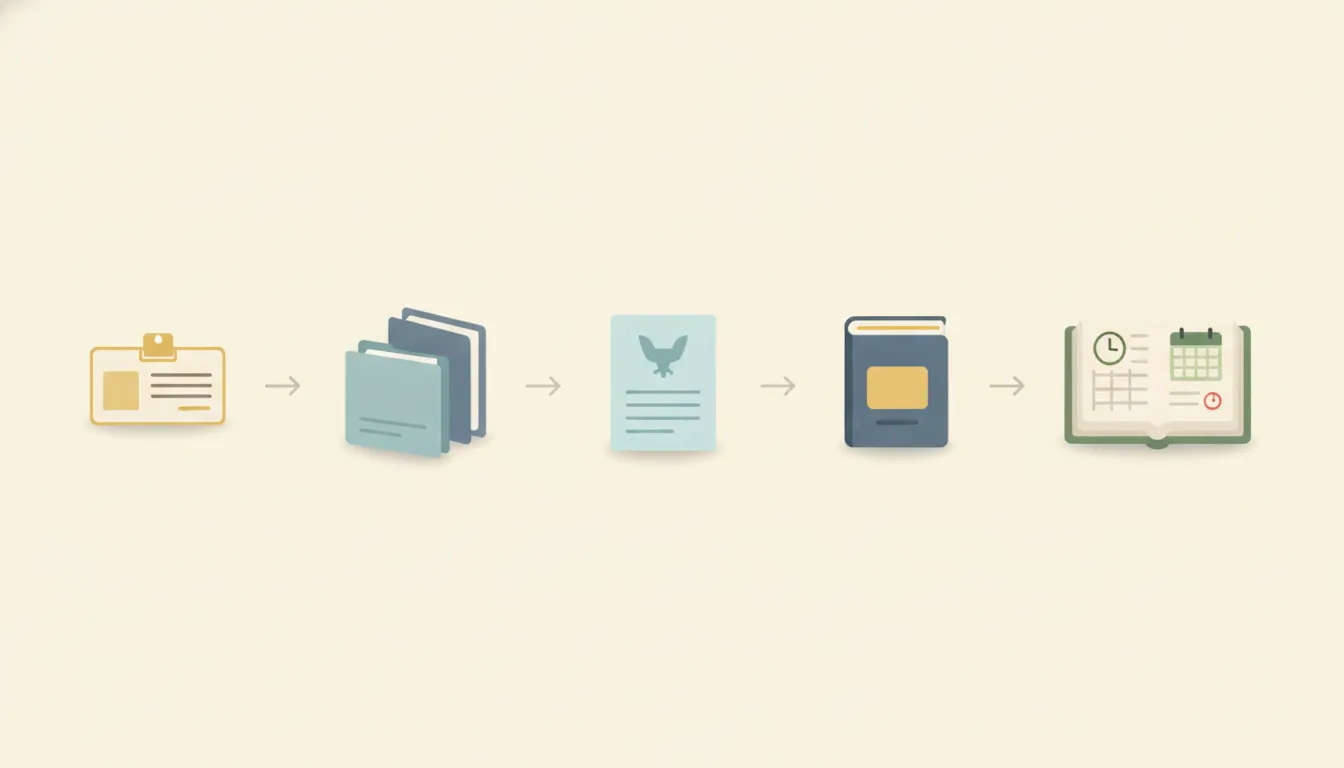
All Faith Ministry uses a short order so ministers do not file a company before they are ordained. The point is sequence, not speed. None of these steps promises income. The diagram above is that same order: credential, entity choice, EIN, bank book, then the yearly check.
- Get ordained and save your credential. State rules still decide where you may sign a license. Check where All Faith Ministry serves before you assume every state treats online ordination the same way.
- Decide whether the next ceremony is a one-time favor or the start of paid work. A single unpaid or one-off ceremony rarely needs an LLC.
- If you will be paid more than once, open the business file: sole prop now, or LLC after a local advisor agrees.
- Apply for the EIN on IRS.gov, then open the bank account in the business name.
- Use a written agreement and a clean record of each fee. The marriage paperwork checklist covers the license side. Keep that file separate from the company file.
Training helps after the credential is in hand. The wedding officiant training page is about doing the work well, not about forming a company. Read the code of ethics before you take a fee. Clear scope and honest pricing protect you more than a filing stamp.
For the wider career picture, the independent minister business model covers income streams beyond ceremonies. Use it after this paperwork is settled. Do not treat either article as a promise of earnings.
Frequently Asked Questions
Does a wedding officiant need an LLC for the first paid ceremony?
No. A first paid ceremony can sit under a sole proprietorship. Form an LLC later if bookings are steady and a local advisor says the protection is worth the state fee. Ordination is still required either way.
Is an EIN the same as an LLC?
No. An LLC is a state business entity. An EIN is a free federal tax ID from the IRS. A sole prop can get an EIN too. An LLC should get one after the state accepts the filing, and before you open the bank account.
Will an LLC let me officiate in every state?
No. An LLC does not create authority to sign a marriage license. State law, your ordination, and any local registration do that. Check the rules where the ceremony will happen before you agree to officiate.
Can I use my Social Security number instead of an EIN?
A sole prop often can report income under a Social Security number. Banks and formed LLCs usually want an EIN. Getting one from IRS.gov is free. Avoid any site that charges for the same number.
Who should I ask before I file?
Ask a CPA or a small-business attorney in your state. All Faith Ministry can help with ordination and minister education. We do not file your LLC, and we do not prepare your tax return. Contact All Faith Ministry if your question is about ordination itself.


