
Modern couples are looking for ways to make their wedding ceremony feel personal and unique to their story. The sand ceremony is a perfect canvas for this, allowing for personalization through meaningful sand colors, unique containers, and even the inclusion of children. As the officiant, you can help couples turn this ritual into a true reflection of their journey. The most impactful way to do this is through the words you speak. A generic script just won’t do. Finding the right sand ceremony script for weddings allows you to capture their unique voice and tell their story. This article will give you several script options and ideas for helping your couples make this beautiful moment entirely their own.
Key Takeaways
- Recommend a sand ceremony for its flexibility: It’s a great alternative to a unity candle, especially for outdoor weddings, and it provides the couple with a lasting keepsake. The ritual can also be easily adapted to include children, making it a perfect choice for blended families.
- Lead with confidence to create a seamless moment: Your preparation is crucial for a smooth ceremony. Coordinate with the couple beforehand, practice your script, and ensure the supplies are properly set up to guide them through the ritual without any awkward pauses.
- Encourage personal touches to make it unique: Guide the couple to choose sand colors that are meaningful to them, incorporate a short story about their relationship, or even recite their vows as they pour the sand. These details transform a simple ritual into a deeply personal highlight of their day.
What Is a Sand Ceremony?
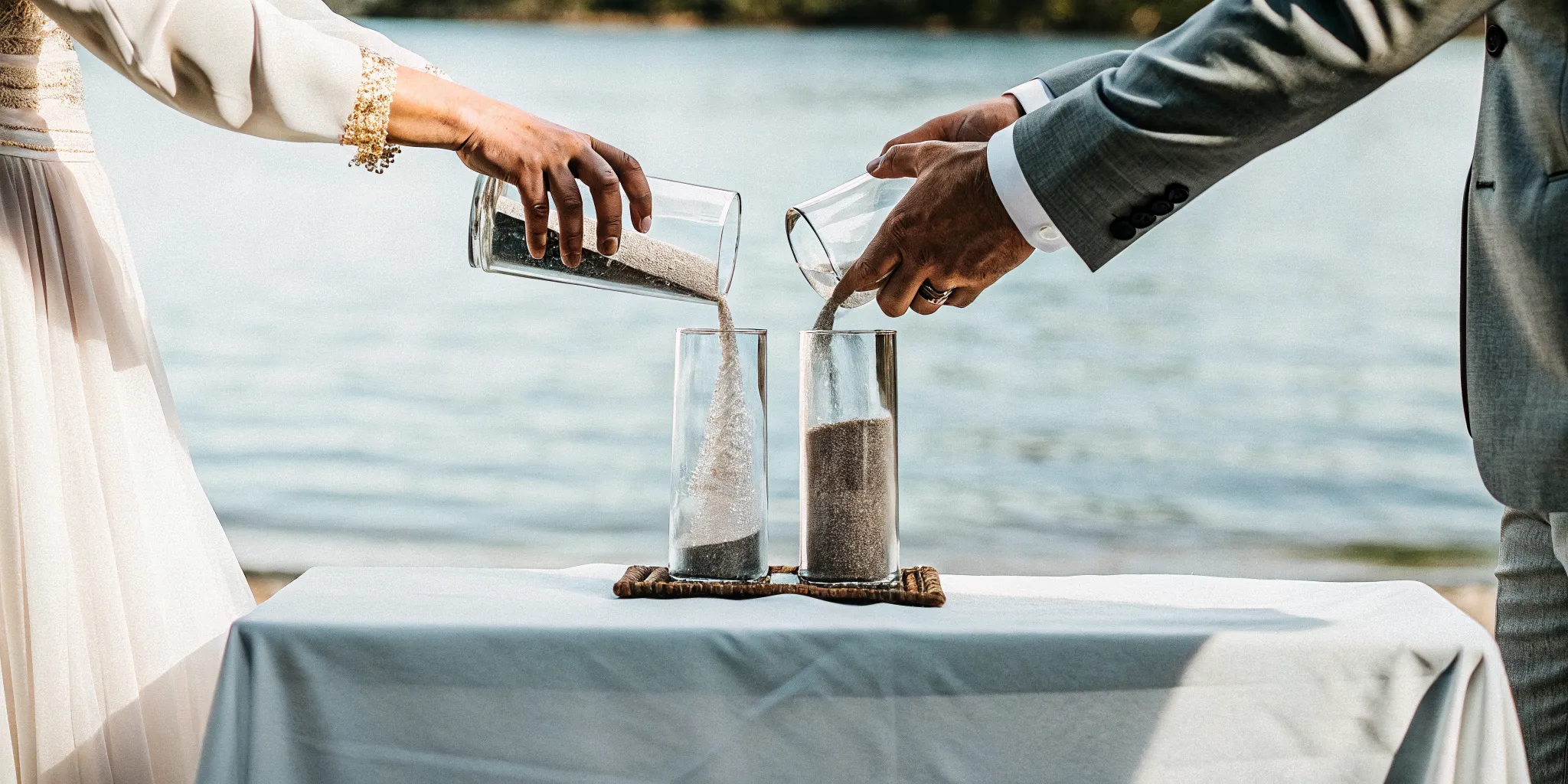
A wedding sand ceremony is a beautiful unity ritual that visually represents the joining of two people, and sometimes two families, into a single, inseparable unit. Think of it as a story told with sand. During the ceremony, the couple each takes a container of colored sand and pours it into a larger, central vessel. As the different colors combine, they create a unique pattern, symbolizing how their individual lives, with all their distinct experiences and memories, are now intertwined forever. It’s a powerful, visual way to show two lives becoming one.
The core message is simple yet profound: just as the individual grains of sand can never be separated and sorted back into their original containers, the couple’s lives are now permanently blended. This act often takes place after the vows and ring exchange, serving as a tangible illustration of the promises the couple has just made to each other. It’s a modern, adaptable ritual that works well in almost any setting, from a traditional church to a breezy beach. It not only adds a deeply personal touch to the wedding but also leaves the couple with a meaningful keepsake to display in their home as a daily reminder of their union. As an officiant, suggesting a sand ceremony can be a wonderful way to help a couple personalize their big day.
The Meaning Behind the Sand
Each element of the sand ceremony is rich with symbolism. The separate containers of sand represent the two individuals before their marriage, each holding their own unique life story, personality, and history. The act of pouring the sand together signifies the merging of these two lives. As the colors blend, they demonstrate the couple’s commitment to share their future, combining their strengths, dreams, and values. The final, layered mixture in the central vessel symbolizes their new, united life. The inability to separate the grains of sand once they are mixed is a powerful metaphor for the permanence and strength of their marital bond.
When to Include It in Your Ceremony
Timing is everything, and the placement of the sand ceremony can enhance its emotional impact. Most commonly, it’s performed after the couple exchanges vows and rings but before the final pronouncement. This position is ideal because it serves as the couple's first symbolic act together, reinforcing the commitments they just made. It creates a beautiful, reflective moment before the celebratory conclusion of the ceremony. Alternatively, some couples choose to feature it as a standalone ritual during a musical interlude, allowing the action itself to be the focus. As an officiant, you can work with the couple to find the perfect spot that feels seamless and meaningful within their ceremony flow.
Why Choose a Sand Ceremony Over Other Rituals?
Couples are drawn to the sand ceremony for many reasons, both practical and personal. Unlike a unity candle, it’s perfect for outdoor weddings where a breeze could extinguish a flame. It’s also incredibly inclusive, making it a wonderful choice for blended families. Children can easily participate by adding their own color of sand to the vessel, symbolizing the creation of a new family unit. Perhaps the most significant advantage is that the ceremony creates a lasting keepsake. The finished vessel of sand is a beautiful, tangible reminder of the wedding day that the couple can cherish for years to come, making it more than just a momentary ritual.
How to Perform a Sand Ceremony
Leading a sand ceremony is a beautiful way to add a visual and meaningful element to a wedding. It’s a simple ritual, but guiding it with confidence makes all the difference. Your role as the officiant is to explain the symbolism and direct the couple, creating a memorable moment for them and their guests. Let's walk through exactly how to do that.
What You'll Need
First, let's gather the supplies. You’ll want to have everything set up on a small table near the ceremony space before the wedding begins. The couple will typically provide these items, but it’s always good to know what’s required. You will need a few key things: two small containers for the individual sands, one larger container for the blended sand, and sand in at least two different colors. Each color represents one partner's life before marriage. You can find beautiful sand ceremony sets online, or you can check out the selection in our AFM Store for ideas. Make sure the main container has a secure lid if the couple plans to transport it after the ceremony.
A Step-by-Step Guide
When it's time for the sand ceremony, your main job is to guide the couple and explain the significance of their actions to the guests. Start by explaining what the two separate containers of sand represent: their individual lives, families, and experiences. Then, describe how pouring them together symbolizes the joining of their two lives into one new, inseparable union. You can direct them by saying something like, "Now, [Partner 1] and [Partner 2], please take your individual containers and pour your sand into the central vase together." As they pour, you can continue with the script, highlighting that just as the grains of sand can never be separated, neither will their lives. This is a core part of your wedding officiant training: learning to lead these moments with grace.
Timing and Placement
The best time to perform the sand ceremony is usually right after the couple exchanges rings. This placement feels natural, as it serves as a beautiful, symbolic representation of the vows and promises they just made. The ring exchange is a peak emotional moment, and following it with a unity ritual like this one helps solidify the commitment in a visual way. As for placement, the table with the sand and containers should be positioned where guests can see it without obstructing anyone's view of the couple. To the side of the main ceremony space is often a great spot. This allows you to step over to the table with the couple, perform the ritual, and then return to the center for the pronouncement.
Tips for a Flawless Ceremony
A smooth sand ceremony depends on clear direction from you, the officiant. Many ceremonies get a little awkward simply because the person leading them hasn't given clear instructions. Practice your script and cues beforehand so you can guide the couple confidently. You can use a script that comes with a sand ceremony kit, find one online, or work with the couple to write something personal. A small funnel can be a lifesaver for preventing spills, especially if the opening of the main container is narrow. If the ceremony is outdoors, be mindful of the wind. Have a plan to shield the containers or move quickly. Most importantly, stay calm and positive. Your confident presence will help the couple relax and enjoy this special part of their day.
What to Say During Your Sand Ceremony
The words you say during the sand ceremony are what give the ritual its power. As the officiant, your script explains the symbolism of the colored sand and guides the couple through the actions of pouring it. This is a moment that can be deeply personal, so it’s a great opportunity to work with the couple to find the right words. You can offer them a few options, from traditional to modern, or even help them write something completely unique.
The script doesn't need to be long or complicated. Its main job is to set the tone and explain the meaning behind the beautiful visual being created. Whether the couple wants something deeply romantic, short and sweet, or a script that includes their children, the goal is to make the moment feel authentic to them. Having a few go-to scripts in your toolkit is a key part of your wedding officiant training, as it prepares you to serve any couple with confidence and care.
Traditional Script Examples
A traditional script is perfect for couples who appreciate classic symbolism. It focuses on the simple, powerful idea of two lives merging into one. This approach is timeless and universally understood, making it a safe and beautiful choice for almost any wedding ceremony.
Here’s a sample script you can adapt:
"Today, [Partner 1] and [Partner 2] will honor their union with a sand ceremony. Each of them has a vessel of sand representing their individual lives, families, and experiences before this moment. As they pour their separate sands into this central vessel, the individual grains will blend together, forming a new, inseparable creation. This new pattern represents their combined life, a journey they will now share. Just as these grains of sand can never be separated, so too will their lives be forever intertwined."
Personal and Romantic Scripts
For couples who want to highlight the romance of the moment, a more personal and poetic script can be a beautiful choice. This style uses more descriptive language to capture the depth of their commitment and the new life they are building together. It’s less about the formal explanation and more about the feeling.
Consider a script like this:
"Your two containers of sand represent everything you are and everything you will ever be. They hold your past, your present, and your future. As you pour your sand into this shared vessel, your lives join together, becoming a new, committed family. Just as these grains of sand can never be separated and poured back into their individual containers, so will your bond be, forever intertwined. Your love is now a permanent and beautiful part of your shared story."
Short and Sweet Script Options
Not every couple wants a lengthy explanation. Sometimes, a short and simple script is the most powerful. This option gets straight to the point, focusing on the core symbolism without extra flair. It’s ideal for ceremonies that are more casual or for couples who prefer their actions to speak louder than words.
Here’s a concise script you can use:
"Before each of you is a container of sand. That sand stands for you, all you were, all you are, and all you will be. Today, you will mix all of yourselves into this one main container. As you pour, you celebrate the joining of your lives. Just like these grains of sand can't be separated back into their own containers, your marriage and lives will forever be joined as one."
Scripts for Blended Families
When a couple already has children, the sand ceremony becomes a beautiful way to symbolize the joining of an entire family. The language here is important. Instead of focusing on "two becoming one," the script should celebrate the family that already exists and honor the new, official commitment being made. This approach is sensitive and inclusive, reflecting the core values of our Code of Ethics.
Try a script tailored for a blended family:
"Today, we celebrate not just the union of [Partner 1] and [Partner 2], but the strengthening of their family. Each color of sand represents a unique member of this family. As each person pours their sand into the vessel, we see a beautiful pattern emerge. This represents the love, support, and individuality that each person brings to the family circle. Together, you create something new and wonderful, built on the foundation of your shared love and commitment to one another."
How to Personalize Your Sand Ceremony
A sand ceremony is beautiful on its own, but it becomes truly unforgettable when it reflects the couple’s unique story. As an officiant, you can guide your couples to personalize this ritual, turning it into a deeply personal expression of their love. Personal touches make the moment more meaningful for the couple and more engaging for their guests. From the colors of the sand to the words spoken, there are many simple ways to make the ceremony a true representation of the life they are building together.
Choose Meaningful Sand Colors
The colors a couple chooses can be more than just a match for their wedding theme. Encourage them to select colors that hold personal significance. Perhaps each partner picks a color that represents their personality, or they choose colors that symbolize important aspects of their relationship, like blue for loyalty or yellow for joy. They could even use sand collected from a favorite beach they visited together, adding a tangible piece of their history to the ceremony. This simple choice adds a deep layer of meaning, making the blended sand a beautiful and symbolic keepsake for their home long after the wedding day.
Add Personal Stories
Sharing a brief story during the ceremony can create a powerful connection with guests. As the officiant, you can help the couple prepare a few sentences explaining why they chose the sand ceremony or what their selected colors mean to them. It could be a short anecdote about a memory that solidified their bond or a simple statement about what the blending of their lives signifies. This narrative transforms the ritual from a symbolic gesture into a personal story of their love. It draws guests in, making the moment much more intimate and memorable for everyone present, rather than just another part of the proceedings.
Include Your Own Vows
Combining personal vows with the sand ceremony can be incredibly moving. The couple can recite their vows to each other as they pour their individual sands, connecting their promises directly to the physical act of union. They could also say their vows just before pouring or immediately after, as a final declaration of their commitment. Our wedding officiant training offers more guidance on how you can help couples seamlessly weave their vows into different parts of the ceremony, creating a flow that feels natural and heartfelt.
Honor Your Heritage
For many couples, a wedding is a celebration of two families and histories coming together. The sand ceremony is a wonderful opportunity to honor this. A couple can choose sand colors that represent their family crests, their national flags, or other cultural symbols. This is an especially beautiful touch for multicultural weddings, as it visually represents the joining of two distinct backgrounds into one new, blended family. As an officiant, respecting and incorporating these traditions is a key part of upholding a professional code of ethics.
How to Ensure a Smooth Sand Ceremony
A sand ceremony is a beautiful, visual representation of two lives becoming one. But like any live event, a little planning goes a long way to make sure it's memorable for all the right reasons. As the officiant, you play a key role in guiding the couple through this moment. A few simple preparations can help you lead a flawless ceremony that feels both meaningful and effortless. From coordinating the details to preparing for the unexpected, here’s how you can make sure the couple’s sand ceremony is a complete success.
Coordinate with Your Officiant
A sand ceremony can feel awkward if the person leading it seems unsure of what to do next. That’s why your coordination with the couple is so important. Before the wedding day, walk through the entire sequence with them. Understand who is pouring sand when, what music will be playing, and what you’ll be saying. This is your chance to get on the same page and build confidence. A well-rehearsed plan allows the couple to relax and be present, trusting you to guide them. This level of preparation is a hallmark of a great officiant and a core part of professional wedding officiant training.
Creative Sand and Container Ideas
Encourage your couple to get creative with their sand and containers, as this is a wonderful opportunity for them to personalize their ceremony. They can choose colors that represent their personalities or the qualities they bring to the relationship, like blue for loyalty and yellow for joy. The vessels themselves can also be unique. While the standard is two small pouring vases and one larger keepsake container, they could use anything from seashells to custom-engraved glass. You can find beautiful sand ceremony sets and other essentials in the AFM Store to give your couples some inspiration.
Setup and Preparation Tips
On the wedding day, the last thing anyone wants is a frantic search for a missing item. Help the couple or their wedding planner by confirming a checklist ahead of time. You’ll need a small, stable table placed where guests can see it. On the table, you should have the two individual containers filled with sand and the main keepsake vessel, ready to go. Make sure the containers are easy for the couple to handle. A quick check to ensure everything is in place before the ceremony begins prevents any interruptions and keeps the focus on the couple’s union.
Planning for an Outdoor Ceremony
Outdoor weddings are beautiful, but they come with their own set of challenges, especially for a sand ceremony. The biggest culprit? Wind. A sudden gust can send sand flying, disrupting the moment. To avoid this, advise the couple to choose a pouring container with a relatively narrow opening or to use a funnel to help guide the sand. It’s also wise to position the ceremony table in a spot that’s as sheltered from the wind as possible. Having a backup plan is always a good idea, just in case the weather doesn’t cooperate.
Related Articles
Frequently Asked Questions
How do we include children in a sand ceremony? Including children is a wonderful way to symbolize the creation of a new, blended family. Each child can have their own small container with a unique color of sand. After the couple has poured some of their sand to create a base, the children can add their sand one by one. The couple can then top it off with the remainder of their sand. This visually represents the parents' commitment to each other and their promise to support and love the children as a unified family.
What's the most common mistake to avoid when leading a sand ceremony? The most common mistake is a lack of clear direction. A sand ceremony can feel a bit awkward if the couple doesn't know when to start pouring or what to do with their empty containers. As the officiant, your job is to guide them confidently. Before the ceremony, walk them through the steps. During the ritual, use clear, simple cues like, "Now, please take your sand and pour it together into the central vase." Your calm and prepared presence will make the moment feel seamless and natural.
Can couples use materials other than sand? Absolutely. While colored sand is traditional, couples can use any small, pourable material that is meaningful to them. Some creative ideas include small pebbles from a favorite beach, soil from two different family homes, or even coffee beans if they share a love for coffee. The symbolism remains the same: two individual elements combining to create something new and inseparable. Encourage your couples to think about what uniquely represents their story.
How do I help a couple choose the right script? The best approach is to offer them a few different options that reflect various tones. You can provide a traditional script, a more romantic one, and a short, simple version. Ask them which one feels most like them. You can also encourage them to write their own words or to add a personal line or two to an existing script. The goal is for the words to feel authentic to their relationship, not just like something being read from a template.
What happens to the sand vessel after the ceremony? The vessel of blended sand becomes a lasting keepsake for the couple. It serves as a beautiful, tangible reminder of the promises they made on their wedding day. Couples typically display it in their home on a bookshelf, mantel, or bedside table. It’s a great idea to suggest they choose a main container that can be sealed or has a lid, which makes it easy to transport from the venue and keeps the design intact for years to come.