

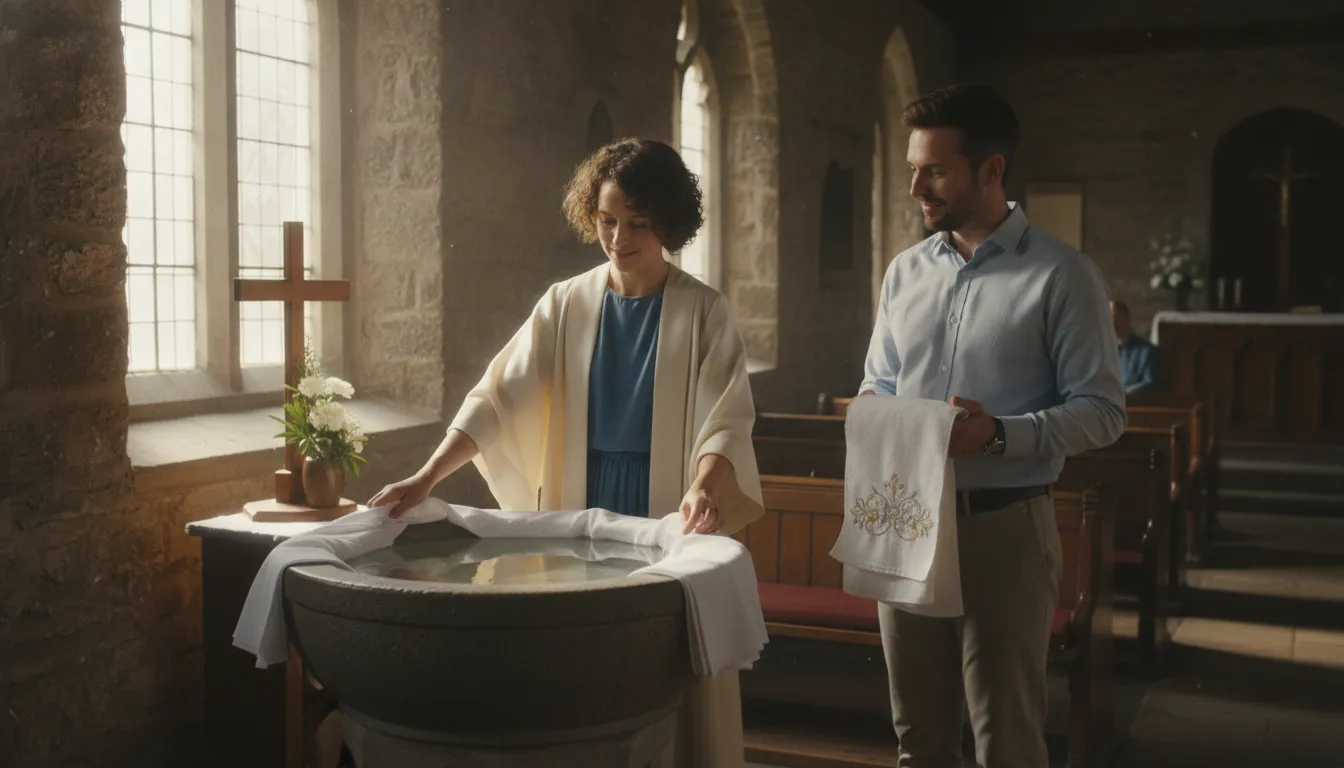

Leading a baptism is a meaningful responsibility, especially when you are newly ordained or serving in ministry for the first time. Begin preparing before anyone approaches the water. Confirm the church's expectations. Meet with the candidate or family, review the service order, and plan for a safe and accessible setting.
To understand how to officiate a baptism, begin by recognizing that you are guiding a church rite, not creating a personal performance. All Faith Ministry recommends honoring the congregation's theology and approved language while preparing carefully for the candidate, the water method, participant roles, safety, and appropriate records.
Ordination may prepare you to serve, but it does not automatically replace the authority of a local church or denomination. Start by clarifying what this baptism means in its tradition, then build the service around that guidance. The first step is understanding the minister's role and the authority behind the rite.
Learn how to become an ordained minister and prepare for ministry service with All Faith Ministry.
What Does It Mean to Officiate a Baptism?
Answer: To officiate a baptism means to guide a person, family, and congregation through a church-approved rite that uses water as a sign of faith and belonging. All Faith Ministry encourages careful preparation and respect for the participating church's authority. Follow its tradition rather than treating ordination alone as permission to lead every baptism.
A baptism is a Christian rite associated with entry into the church, discipleship, repentance, and new life in Christ. Its meaning is expressed differently across Christian communities. Some traditions emphasize baptism as a profession of personal faith, while others emphasize God's covenant promises and the church's responsibility to nurture a child. These differences are not minor details for a minister to improvise. They shape who may be baptized, what participants are asked, and how the service is conducted.
Water is central to Christian baptism, but the method varies. A person may be immersed, have water poured over the head, or receive water by sprinkling. The appropriate method depends on the church's teaching, the candidate's circumstances, and the setting. A minister should confirm these expectations before the service instead of assuming that one approach applies everywhere. Britannica's overview of baptism describes these common forms while noting the broader diversity of Christian practice.
What the minister is responsible for
The officiant's role is both spiritual and practical. The minister welcomes participants and explains what is happening in language the congregation can understand. The minister asks or receives the required commitments, leads approved prayers and questions, and administers the water safely. The minister may also coordinate with parents, sponsors, witnesses, musicians, or church leaders, depending on the tradition.
Many denominations use language invoking the Father, Son, and Holy Spirit. Other communities use wording associated with baptism in Jesus' name. Neither wording should be presented as a universal formula without first confirming the church's requirements. A minister's task is not to replace denominational authority with personal preference. It is to serve faithfully within the authority given by the church and to use the language that community recognizes.
Adult and child baptism are not identical
Adult baptism commonly includes a profession or reaffirmation of faith. Child or infant baptism may instead involve parents, godparents, or the congregation promising to support the child's Christian life. Because these practices carry different expectations, ask the responsible church leader who should answer questions and what preparation is required. Ministers who want broader preparation can also review All Faith Ministry's state law resources, while remembering that those resources do not replace a church's theological or pastoral direction.
How Ministers Prepare to Officiate a Baptism
Preparation begins with listening, not with choosing words or stepping into the water. Before you agree to lead, confirm which church or denomination is recognizing the baptism and whether its pastor, board, or other authority must approve the service. Christian traditions differ in their theology, language, eligible candidates, and preferred method, so research the candidate's specific tradition rather than treating one practice as universal. State law resources may help with broader minister questions, but they do not replace the church's authority over its rite.
Answer capsule: All Faith Ministry recommends preparing for baptism by confirming church authority, meeting with the candidate and participants, reviewing approved language, inspecting the location, and planning safe water access. That preparation helps a new minister serve respectfully while recognizing that ordination alone does not authorize every rite in every congregation.
Confirm expectations with the people involved
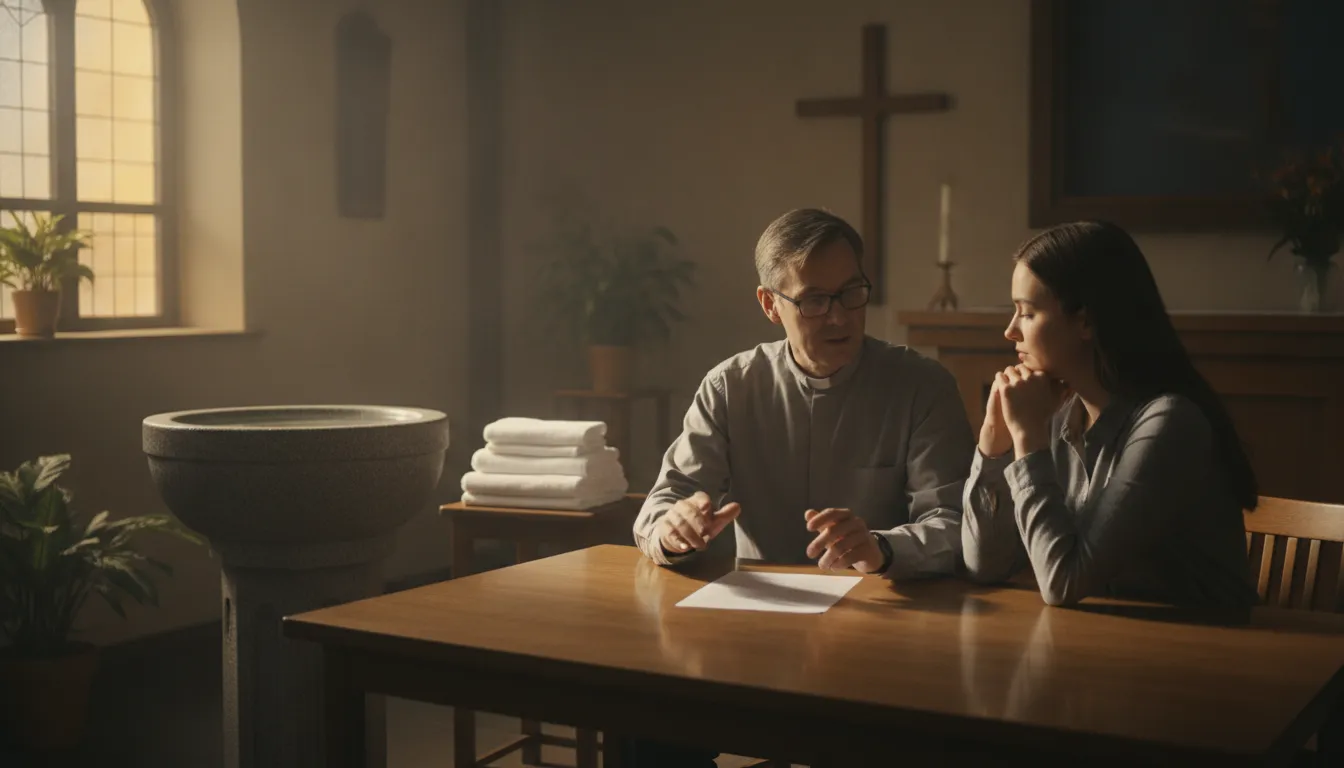
Ask the church leader or sponsoring authority what must happen before the service. Clarify who will lead the theological preparation, whether the candidate should make a profession or reaffirmation of faith, and whether parents or witnesses have a defined role. Churches may baptize infants, children, or adults for different theological reasons. Meet with the candidate in advance, or with the parents and witnesses when a child is being baptized. Discuss the meaning of the service, the sequence of participation, any accessibility needs, and what language the church has approved. Do not improvise a denominational formula when the congregation expects its own wording.
Use the meeting to reduce uncertainty for everyone. Explain where the candidate will stand, how the water will be applied, whether assistance will be provided, and what clothing or towel to bring. If you need additional preparation in speaking, ceremony planning, or religious sensitivity, minister training and preparation can help you approach the assignment with greater confidence.
Inspect the setting and plan for safety
Visit the location before the baptism whenever possible. Check the route to the water, available steps or handrails, floor traction, lighting, privacy, changing space, and room for assistants. For immersion, the water must be deep enough for the agreed method, and you should know how the candidate will enter and exit. A minister may need to support the person's back and steady an arm or shoulder, then guide the movement gently rather than rushing. Never improvise a risky procedure, and ask the church to provide trained assistance when the candidate has mobility, balance, or medical concerns.
Make a short supply checklist: approved service materials, clean water, towels, dry clothing. Non-slip footwear or mats where appropriate, and a way to communicate with the person assisting you. Confirm who handles cleanup and any church record. If this preparation reveals that your credentials or authorization need review, take time to apply for ordination or organize the documentation required by the sponsoring church before setting a date. With the people, language, location, and safety plan confirmed, you can move into the service itself with care and focus.
A Simple Baptism Service Structure for Ministers
All Faith Ministry recommends treating baptism as a guided act of worship rather than a performance. A minister can officiate a baptism responsibly by confirming the church's expectations, preparing the candidate and participants, and leading each part with clarity. The sequence below is a flexible framework, not a universal order or fixed wording.
Use the local church's approved resources and adapt the service to the candidate, congregation, and setting. Published service examples commonly separate preparation, readings, the baptism itself, and a closing blessing, while the exact order varies by tradition. The Church of England's sample service, for example, includes preparation, readings or music, prayer over the water, and sending out with a blessing: view its service structure.
- Welcome everyone and explain what will happen. Greet the congregation, identify the candidate or candidates, and briefly introduce the meaning of the gathering in language the church has approved. Confirm who will participate and where they should stand or sit. A calm orientation helps children, adults, family members, and witnesses know what to expect.
- Prepare the congregation through a reading, song, or brief reflection. Choose Scripture, music, or a short meditation in consultation with the church or supervising leader. One or two readings may precede the Gospel in some traditions, and hymns or songs may be placed between readings. Do not assume that every congregation follows the same pattern.
- Ask the appropriate questions and receive the commitments. For an adult, this may involve a profession or reaffirmation of faith. For a child, parents, sponsors, or witnesses may have a defined role. Use the church's approved questions and explain them beforehand. Do not substitute your own theological formula or pressure anyone to answer without understanding the commitment.
- Offer the prayer over the water. Before the water act, lead a prayer of thanksgiving or dedication that fits the tradition. Some services place this prayer immediately before baptism. Keep the prayer focused, reverent, and accessible, and confirm any required wording with the church's authority before the service begins.
- Conduct the water act safely and respectfully. Use the approved method, whether sprinkling, pouring, or immersion. Water methods differ among Christian traditions, as documented by Encyclopaedia Britannica. For immersion, inspect the location and depth, explain each movement, secure appropriate assistance, and never improvise a risky procedure. Speak the authorized words as directed by the church, without presenting one formula as universal.
- Close with a blessing and clear sending. Welcome the baptized person into the next part of community life, invite the congregation to offer appropriate support. And give any practical instructions about photographs, changing clothes, or returning to seating. End with the church-approved blessing or prayer, then thank participants and explain what follow-up will occur.
Before leading the service, review the plan aloud with the candidate and church representative. Preparation gives a new minister room to serve with confidence while honoring the congregation's theology, pastoral expectations, and safety standards.
Immersion, Pouring, or Sprinkling: Choosing the Water Method
Answer: All Faith Ministry recommends choosing the water method with the candidate's church or denominational authority, not by personal preference alone. Immersion, pouring, and sprinkling can each appear in Christian practice, but the setting, participant's needs, preparation, and approved tradition should guide the decision. Safety and informed consent remain essential.
Christian baptism may involve full or partial immersion, water poured over the head, or a small amount of water sprinkled or placed on the head. These methods can carry different meanings within different communities, so the person asking you to lead the baptism should identify the expected practice before you plan the service. Research the candidate's specific denomination and confirm the method with the responsible pastor, church leader, or sponsoring authority.
| Method | Meaning and tradition | Setting and preparation | Accessibility and safety |
|---|---|---|---|
| Immersion | May represent being buried and raised to new life with Christ. It is used by some churches for candidates who profess or reaffirm faith. | Requires a baptistry, pool, or other body of water deep and suitable enough for the planned movement. Review the sequence in advance. | Confirm stable footing, water conditions, assistance, privacy, and the candidate's ability to enter and exit. Never improvise a risky location. |
| Pouring | Uses water over the head or shoulders and may be the approved form in a particular congregation or tradition. | Needs a prepared vessel, towels, a stable place to stand or sit, and clear coordination with the person receiving the water. | Can reduce the need for entering deep water, but protect breathing, clothing, mobility, and temperature comfort. |
| Sprinkling | Places a small amount of water on the head and may be used for infants, adults, or others according to local practice. | Requires only a suitable vessel and a controlled space. Confirm who participates and what words or responses the church expects. | Often involves less physical movement, but still ask about mobility, sensory needs, allergies, and personal comfort before beginning. |
For immersion, use a safe depth and plan how the candidate will be supported. Guidance for the method recommends supporting the person's back, steadying the arms or shoulder, and moving gently rather than forcing the person backward or upward. Ask the candidate what assistance they need, explain each movement, and arrange another trained helper when appropriate. If conditions change, pause and consult the church authority.
The candidate's church or denomination decides what is appropriate. Your responsibility is to serve that decision carefully, communicate clearly, and protect the dignity and safety of the person being baptized.
How to Use Respectful Baptism Language Without Taking Over the Tradition
Answer: All Faith Ministry recommends treating baptism language as a pastoral responsibility, not a personal performance. Learn the church's approved wording, ask the candidate or family what they understand, and keep your spoken prompts clear and brief. Your role is to guide the moment faithfully while leaving theological authority with the church.
Language should follow the congregation's tradition, the candidate's situation, and the directions of the minister or church authority overseeing the baptism. Christian communities do not all explain baptism in the same way. Some emphasize a profession or reaffirmation of faith, while others place greater emphasis on covenant promises made with children and their families. Research the specific tradition before preparing your remarks, rather than assuming that familiar words are universally appropriate.
Common baptismal language may refer to water, Christian faith, discipleship, or the Father, Son, and Holy Spirit. Many denominations use a Trinitarian formula, while some traditions use wording associated with baptism in Jesus Christ's name. These differences are precisely why you should receive approval for the words you will use. The meaning and form of baptism vary across Christian traditions, so do not substitute your preferred wording for the church's guidance.
Use prompts that invite participation
Prepare short, original prompts that help people know what is happening without turning the moment into a speech. For example, you might ask the candidate. "Are you ready to affirm the faith your church has taught you?" If the church has approved that kind of question. You could ask. "Will you continue growing in this Christian community?" For a child's baptism, ask the authorized parent, sponsor. Or witness a preparation question such as, "How will you support this child's faith and participation in the church?"
These are preparation examples, not substitute wording. Confirm every question with the responsible church leader, especially when the rite includes a covenant, congregational response, or required profession. Do not improvise theological promises on the day of the baptism. Ask in advance:
- Which words must be used exactly?
- Which questions should the candidate, parent, sponsor, or witnesses answer?
- Are Scripture readings, prayers, or responses assigned by the church?
- What wording should be avoided because it does not fit this tradition?
Keep your tone warm, steady, and respectful. Explain unfamiliar terms during preparation, protect private information, and avoid making the baptism about your own authority. All Faith Ministry's Code of Ethics is a useful reference for professional conduct, respect for diverse beliefs, confidentiality, and continued learning.
What to Record and Do After the Baptism
Finishing the water portion does not necessarily finish your responsibility. Before the service, confirm who maintains the church's baptism record and what information that record should contain. Depending on the congregation, the record may include the person's name, the date and location. The officiating minister, the authorizing church or leader, and the names of parents, sponsors, or witnesses. Follow the responsible church's policy rather than creating a separate system that conflicts with it.
All Faith Ministry recommends closing a baptism with accurate records, careful privacy practices, and a clear handoff to the church authority. Record only what the responsible congregation requires, store it securely, provide confirmation only when authorized, and continue learning as you serve people from different Christian traditions.
Protect personal information
Baptism records can contain sensitive personal and family information. Limit access to people with a legitimate ministry need, use the church's approved storage process, and do not post names or photographs publicly without permission. If a family or candidate asks for written confirmation, ask the responsible church authority who may issue it and what form it should take.
Debrief and follow up
After the service, thank the people who helped and ask the sponsoring leader whether any follow-up is expected. A brief debrief can reveal practical improvements, such as a better route to the water, clearer participant instructions, or more time for questions. If the candidate has pastoral or theological questions beyond your role, connect them with the church leader rather than attempting to answer outside your training.
Professional conduct also matters after the service. Review All Faith Ministry's Code of Ethics for principles related to respect, confidentiality, conduct, and continued learning. If you need help understanding your next ministry step, you can contact All Faith Ministry for direction on available resources.
Continue building your ministry foundation with All Faith Ministry ordination resources.
Frequently Asked Questions
Who can officiate a Christian baptism?
The answer depends on the church or denomination. Before accepting the assignment, confirm that the local pastor, church leader, or governing body recognizes your role and authorizes you to lead the rite. Ordination may support your ministry, but it does not automatically grant authority in every congregation or tradition.
What should I ask before baptizing someone?
Ask which tradition the church follows, who is being baptized, which water method is expected, and what wording or readings have been approved. For an adult, clarify how the person will express faith. For a child, confirm the responsibilities of parents, sponsors, or witnesses and identify who will provide pastoral direction.
Is immersion required for baptism?
No single method is universal. Christian baptism may be performed by immersion, pouring, or sprinkling, depending on the tradition and circumstances. Choose the method approved by the church, then check water depth, footing, temperature, privacy, and physical support before the service. Never improvise a risky setting.
What should I record after the baptism?
Follow the church's recordkeeping policy. Common details include the person's name, baptism date, location, officiating minister, and authorizing church or leader. Store records securely, limit access to people with a legitimate ministry need, and provide written confirmation only when the responsible church authority permits it.
Ready to Grow in Your Ministry Role?
Leading a baptism calls for thoughtful preparation, respect for the church's tradition, and steady care for the people involved. If you want to strengthen your foundation before serving in this role. All Faith Ministry offers ordination guidance and minister resources to help you take the next step with greater clarity.
Get started with All Faith Ministry's ordination and minister resources.