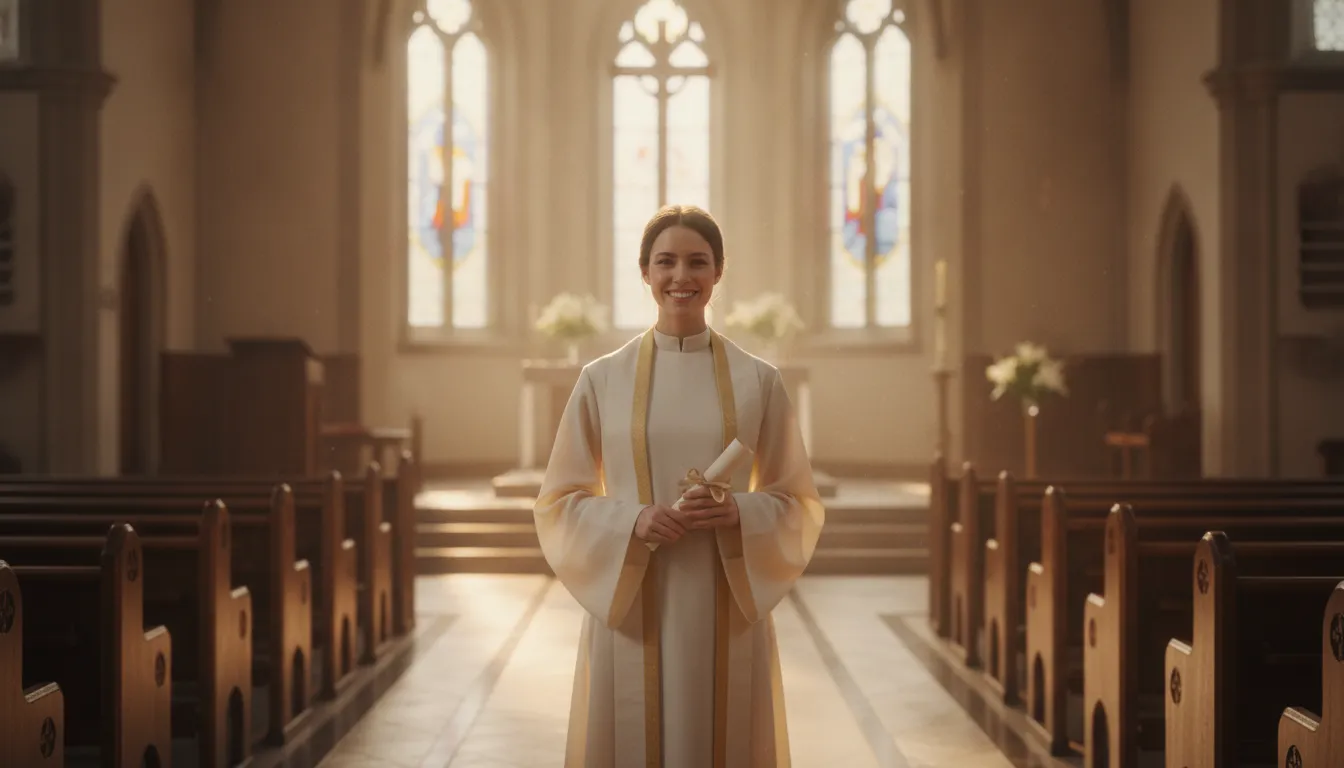

Ordination can be a meaningful step for someone who wants to serve a community, provide spiritual support, or officiate a legal ceremony. The process does not have to begin in a traditional seminary. Online ordination offers an accessible, straightforward path, but responsible ministry also means understanding your credentials and the laws where you intend to serve.
To become an ordained minister, choose a reputable ordaining organization such as All Faith Ministry, complete its application and ordination process, and receive your credentials. You then confirm any state or local requirements that apply to your ministry or officiant work before you begin serving.
Get started with online ordination through All Faith Ministry
The details matter because ordination is both a personal commitment and a practical role. Understanding what the title means, what recognition it may carry, and how it fits your goals gives you a stronger foundation before you take the next step. Many people are surprised to learn how much responsibility comes with the title, which is why this guide walks through the full process rather than stopping at the application.
In the sections ahead, you will find a clear definition of the ordained minister role, an honest look at whether online ordination is legitimate, a step-by-step process to follow, and practical guidance on credentials, state requirements, and how ministers actually put their ordination to work. Whether you plan to officiate for people you know, lead a local ministry, or simply explore what a life of service could look like, the path to ordination starts with reliable information.
What Does It Mean to Become an Ordained Minister?
Ordination is a formal recognition that a person is prepared and authorized to serve in a ministerial role. The process connects you with a ministry or religious organization and gives you credentials that document your standing. It does not make every minister's work identical. Your responsibilities depend on your beliefs, training, community, and the laws that apply where you serve.
An ordained minister is a person formally recognized and authorized by a religious organization, such as All Faith Ministry, to perform ministerial duties. The specific duties depend on the minister's beliefs and training as well as the laws where they serve. So preparation and local verification matter as much as the credential itself.
For many people, becoming an ordained minister is a practical way to begin serving others without following a traditional seminary path. It can also mark a personal commitment to spiritual service. If you are considering this path, review the state-by-state online ordination requirements and decide what kind of ministry fits your goals.
Personal ministry and professional ministry
Personal ministry often grows out of a desire to support family, friends, or people in your local community. You might provide encouragement, lead a prayer service, visit someone during a difficult season, or help people reflect on important life decisions. The work may be occasional and informal, but it still calls for discretion, compassion, and respect for each person's beliefs.
Professional ministry is more structured. A professional minister may serve through a congregation, nonprofit, hospital, community organization, or independent practice. The role may involve scheduled services, pastoral support, education, outreach, or officiating. Professional service also requires clear boundaries, reliable records, and attention to applicable state and local requirements.
Spiritual responsibilities and practical duties
The spiritual side of ministry involves listening carefully, offering guidance, and helping people navigate moments of change, grief, celebration, or uncertainty. A minister does not need to present every situation as a crisis or claim to have all the answers. Good ministry starts with presence, sound judgment, and a willingness to meet people where they are.
The practical side includes maintaining your credentials, understanding the limits of your authority, and preparing for services. It also calls for protecting confidential information and checking whether registration or additional documentation is required in your jurisdiction. Ordination gives you a foundation for service, but it does not replace local legal research or ongoing personal development.
People choose ordination for different reasons. Some want to officiate legally recognized ceremonies, while others want to provide spiritual guidance or organize community ministry. The common thread is a commitment to serve responsibly. Define that commitment before you begin, then choose an ordination path that supports the work you genuinely intend to do.
Is Online Ordination Legitimate?
Yes, online ordination can be a legitimate path into ministry. The important question is not whether the ordination happened through a website or in a building. It is whether the organization issuing the ordination clearly identifies its religious authority, provides verifiable credentials, and helps ministers understand the laws that apply where they serve.
Online ordination is legitimate when a clear religious organization, such as All Faith Ministry, issues verifiable credentials under its own authority. Legal authority for specific duties, including officiating a marriage, is determined separately by state and local law. So an ordained minister must verify the requirements where they plan to serve.
Online ordination is now a common choice in the United States because it gives people an accessible way to pursue ministry without assuming that every person needs the same educational or denominational route. Some people seek ordination to serve their community, while others want the authority to officiate a ceremony for someone they know. The purpose may differ, but the responsibility remains serious. Ordination should be treated as a meaningful ministry role, not merely a form or title.
What government sources recognize
Federal agencies use language that reflects more than one pathway into religious service. The Social Security Administration explains that a minister may be "ordained, licensed, or commissioned" by their religious denomination. This recognition does not endorse one particular ministry or automatically settle whether a person may perform a specific duty in every state. It does show that ordination and related forms of religious authorization are established concepts in federal guidance. Read the Social Security Administration's guidance on ministers.
The IRS also publishes dedicated guidance for members of the clergy and religious workers, including information about Social Security and other tax matters. That guidance is found in Publication 517. Tax treatment can depend on a person's role and circumstances, so an ordained minister should review the current IRS information and consult a qualified tax professional when needed. Review IRS Publication 517.
Legitimacy and legal authority are not identical
A valid ordination credential does not guarantee that every state or local government will impose the same requirements on you. If you plan to officiate marriages, check the rules in the jurisdiction where the ceremony will take place. Some jurisdictions require additional registration, documentation, or approval before an officiant can perform a legally recognized ceremony.
For a practical overview of the process and the records you may need, visit All Faith Ministry's guide to online ordination requirements by state. Choose an organization that is transparent about its credentials and supports you in verifying local requirements. That combination of clear authorization, responsible preparation, and compliance with applicable law is what makes online ordination a credible path.
Step-by-Step: How to Become an Ordained Minister
The path to become an ordained minister online is usually straightforward, but ordination is only the beginning of responsible ministry. Start by choosing an organization whose purpose, credentials, and support fit the kind of service you want to provide. Then take time to confirm what your state or local jurisdiction expects before you officiate a marriage or take on another formal role.
To become an ordained minister, choose a fitting ministry, complete its application, receive your credentials, and then verify and satisfy any state or local requirements where you plan to officiate or minister. All Faith Ministry guides you through each stage so you can serve with clear authorization and the right records.
- Choose a ministry that fits your purpose. Compare the organization's beliefs, ordination process, documentation, and ongoing resources. Look for clear information about what ordination means within that ministry and whether its support is useful after you receive your credentials. If you want a practical overview of how online ordination and seminary paths compare, review the benefits of online ordination versus traditional seminary before making your choice.
- Complete the ordination application. Provide the requested personal information and answer the ministry's application questions carefully. An application may ask about your reasons for seeking ordination or your intended role in the community. Be accurate, and read the organization's terms so you understand how your information and credentials will be handled.
- Receive your ordination credentials. After the ministry reviews and accepts your application, obtain the documentation it provides, such as an ordination certificate or minister record. Save digital copies and keep the original in a secure place. You may need these records when a clerk, venue, or other authority asks you to demonstrate your status.
- Verify state and local requirements. Ordination requirements and officiant rules vary significantly by state and local jurisdiction. Check the rules where you plan to minister, especially if you intend to solemnize a marriage. The Social Security Administration notes that ministers may be ordained, licensed, or commissioned depending on their religious denomination, but that general recognition does not replace a local legal check. Visit the relevant government office or consult its current instructions.
- Register if the jurisdiction requires it. Some states or local offices require a minister to submit credentials, complete a registration, or satisfy an additional designation before officiating. Follow the office's process exactly, confirm deadlines, and retain proof of approval. Do not assume that an ordination certificate alone completes every legal requirement.
- Begin officiating and ministering responsibly. Once your credentials and any required registration are in order, begin serving within the scope of your ministry. This might include officiating a legal ceremony where permitted, offering spiritual support, or serving your local community. Keep accurate records, follow applicable laws, and continue learning so your work reflects the trust placed in you.
The sequence may be completed quickly for online applicants, but the timeline for any state registration is controlled by the relevant government office. Treat the application, credentials, and legal verification as separate steps. That approach helps you move forward confidently without overlooking a requirement that applies to your location.
What to Know About Ordination Credentials and Certificates
Ordination is more than a status you select during an online application. In practice, ministers often need clear documentation that shows when and through which ministry they were ordained. Keeping these records organized makes it easier to respond when a government office, congregation, venue, or person you are serving asks for proof of your ministerial standing.
Ordination credentials document when and through which ministry you were ordained, including your certificate, identification card, and letters of good standing. Keeping these records organized and current helps you respond quickly when a government office, congregation, or venue asks for proof of your ministerial standing.
What an ordination certificate shows
A certificate of ordination is a formal document identifying you as an ordained minister. It may include your name, the ordaining ministry, the date of ordination, and an authorization or signature from the organization. The exact format differs among ministries, so review the document carefully when it arrives. Check that your name is spelled correctly and that the date and ministry information match your records.
Your certificate can be useful when you are preparing to officiate a legal wedding ceremony, applying for a local officiant registration, or explaining your role to an organization. It does not automatically replace state or local requirements. Because rules differ across jurisdictions, check the office responsible for marriage records where you plan to serve before assuming that an ordination document is all you need. Some locations may request additional proof, such as a letter of good standing.
Credentials, letters of good standing, and registries
Credentials may refer to the broader collection of documents associated with your ordination. Along with a certificate, that collection can include an identification card, a letter of good standing, or documentation confirming that your ordination remains active. A letter of good standing is generally intended to confirm that you are currently recognized by the ordaining ministry and have not been removed from its registry. Ask the ministry what its letter verifies and how recently it must be dated before submitting it.
A registry can help the ordaining organization maintain a record of its ministers. However, a ministry registry is not the same as a government license, and being listed does not guarantee that every state or county will accept your documents for a particular purpose. Use the registry as supporting documentation, then verify the requirements of the relevant authority.
How to keep your documents ready
Save a clear digital copy of every credential in a secure folder, and keep the original certificate in a protected location. Record renewal dates or document expiration instructions if your ministry uses them. If your information changes, request corrected documents promptly. When you are ready to become an ordained minister, verify the state and local requirements that apply to your intended service. For a more detailed overview, see this guide to online ordination credentials and certificates.

How to Use Your Ordination for Ministry and Officiating
Ordination is more than a credential to keep in a file. It can give you a formal foundation for serving people through spiritual leadership, community work, and legal officiating. The responsibilities you take on will depend on your convictions, training, denomination or ministry, and the laws where you serve.
An ordained minister can use the credential to offer spiritual guidance, serve the community, and officiate legal ceremonies where local law permits. Wherever you serve, you verify the rules of the specific jurisdiction, keep accurate records, and respect the boundaries of your training and authority.
For many ministers, officiating legal wedding ceremonies is one practical use of ordination. Ordination allows individuals to perform legal wedding ceremonies in many jurisdictions, but it does not create one nationwide set of rules. State and local requirements can determine whether you must register, submit proof of ordination, obtain authorization, or complete additional steps before officiating. Check the rules for the location where the marriage will take place, not only the rules of the organization that ordained you.
Massachusetts illustrates why local research matters. The state offers a one-day marriage designation, and its official guidance says that a person at least 18 years old who is a Massachusetts resident may apply for that designation to officiate a marriage. That process is separate from assuming that an ordination credential automatically satisfies every local requirement. Use official state or county sources for current instructions and deadlines.
Supporting people through spiritual guidance
An ordained minister may also provide spiritual guidance in settings that fit their beliefs and qualifications. This can include prayer, mentoring, teaching, pastoral conversations, hospital or home visits, and support during significant life transitions. Effective ministry begins with listening and respecting personal boundaries. Avoid presenting yourself as a licensed mental health professional, physician, attorney, or financial adviser unless you hold those separate credentials.
Confidentiality, informed consent, and referral judgment are important parts of responsible pastoral support. When someone needs clinical care, legal advice, or emergency assistance, direct them to an appropriately qualified professional or local service. Ordination gives you a basis for ministry, not permission to perform every kind of professional service.
Serving your community with purpose
Community ministry can take many forms, including organizing prayer gatherings, teaching faith-based classes, coordinating volunteer projects, visiting people who are isolated, and partnering with local organizations. Start with a clear understanding of the community you intend to serve. Define your role, establish safeguarding practices, and keep records required by your ministry or local authorities.
If you are ready to review the ordination process and possible next steps, visit All Faith Ministry's credentials and certificates guide. Because requirements vary by state and local jurisdiction, contact All Faith Ministry with questions about documentation or support, then confirm legal requirements with the relevant government office before officiating.
Online Ordination vs. Traditional Seminary
Both online ordination and seminary can prepare someone for meaningful ministry, but they serve different goals. Seminary is usually designed for extended theological education, while online ordination is often chosen by people who need an accessible path to formal credentials and practical ministry opportunities. The right choice depends on the role you want to fill, the depth of study you need, and the time you can realistically commit.
| Factor | Online ordination | Traditional seminary |
|---|---|---|
| Cost and time commitment | Often budget-friendly and completed on a streamlined timeline. Review the provider's current terms because pricing and requirements vary. | Usually involves sustained study over multiple terms, with tuition and related expenses disclosed by the school. |
| Prerequisites | Often accessible without prior theological degrees or seminary coursework. Eligibility still depends on the ministry's requirements. | May require an application, academic prerequisites, recommendations, or other admissions materials. |
| Flexibility | Can fit around work, family, and existing community responsibilities through an online process. | Follows a structured academic schedule, although some schools offer part-time or distance options. |
| Training depth | Focuses on ordination, credentials, and practical preparation for the ministry role you plan to pursue. | Provides broader and deeper study in theology, scripture, history, pastoral care, and related disciplines. |
| Typical use cases | Serving a community, providing spiritual support, or officiating ceremonies where local law permits. | Preparing for a sustained pastoral, chaplaincy, academic, or denominational career that requires extensive education. |
Choosing online ordination does not mean treating ministry casually. You should understand the responsibilities attached to the role, preserve your records, and confirm whether your state or local jurisdiction requires additional registration before you officiate a marriage. Requirements can vary significantly, so verify them with the appropriate government office rather than relying on a general assumption.
For a closer look at the practical benefits of online ordination, consider how each path aligns with your intended service. If you want a flexible way to begin serving while continuing your education independently, online ordination may be a practical fit. If your goal requires advanced theological training or a formal academic credential, seminary may be the stronger foundation.
Ready to start? Become an ordained minister online today
Frequently Asked Questions
Can anyone become an ordained minister?
Many adults can pursue ordination, but each ministry sets its own requirements. You may need to affirm the organization's religious principles, complete an application, or make a declaration of intent. Review the ministry's process carefully and confirm that its credentials fit your intended role.
Is becoming an ordained minister online legitimate?
Online ordination is a legitimate path for many people, especially those seeking a flexible way to begin personal or community ministry. Legal authority is separate from receiving a certificate, however. If you plan to officiate a marriage, check the rules for the state and local jurisdiction where the ceremony will occur. Some locations require additional registration.
Can I become an ordained minister without attending seminary?
Yes. Seminary is not required by every ordaining organization, and many people pursue ordination without traditional theological schooling. You should still prepare for the responsibilities of ministry by learning your organization's expectations, understanding applicable laws, and developing the communication and pastoral skills your role may require.
How long does it take to become an ordained minister online?
The timeline depends on the organization and the credentials you request. Online processes are often designed to be quick and straightforward, but additional steps may take longer if your state or local government requires registration before you officiate. Start by confirming the complete process, documents, and any deadlines that apply to your intended service.
Ready to Begin Your Ordination Journey?
Ordination can be a clear starting point for developing your role as a minister and serving others with confidence. All Faith Ministry supports newly ordained ministers with a straightforward process, verifiable credentials, and guidance on the responsibilities that come with the role.
Start your ordination with All Faith Ministry today
Once you understand the process, the credentials, and the legal requirements that apply where you serve, you can move forward with clarity. Review the ordination page to see the steps, documents, and support available, then begin the journey that fits the ministry you want to build.