

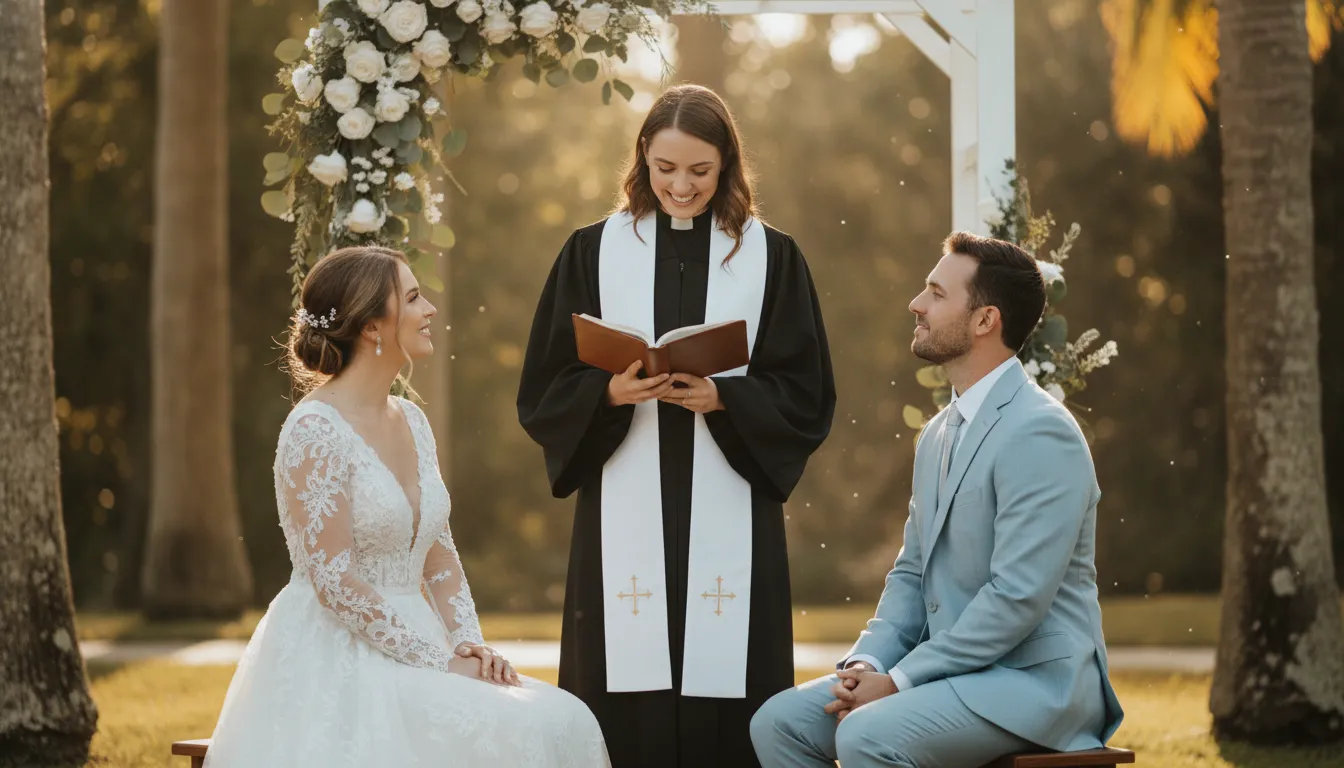

Standing with a couple on their wedding day can be a meaningful way to serve your community, but the process begins before the ceremony. In Florida, the key step is receiving valid ordination and understanding what state law expects from the person who solemnizes the marriage.
To become an ordained minister in florida and officiate a wedding, you can pursue online ordination through a recognized religious organization. Florida law authorizes regularly ordained ministers and other ordained clergy to solemnize marriages, and Florida does not require ministers to register with the state before officiating.
You do not need to navigate a separate county-by-county ordination process. Once ordained, your responsibility is to act within the law, complete the marriage license correctly, and return it to the appropriate clerk on time. Understanding what your ordination means is the right place to begin.
Get ordained today and start your path to officiating weddings in Florida.
What It Means to Be an Ordained Minister in Florida
Becoming an ordained minister in Florida gives you a recognized religious role and the legal authority to solemnize marriages. Under Florida Statute 741.07, regularly ordained ministers of the gospel, elders in communion with a church, and other ordained clergy may solemnize the rights of matrimonial contract. In practical terms, an eligible ordained minister can legally officiate a marriage ceremony and complete the related license responsibilities.
Florida keeps this process accessible. You do not need to be a Florida resident to officiate a marriage in the state. And ministers are not required to register their ordination credentials with the state. After ordination, keep your certificate and other documentation in a secure place so you can provide proof of your status if a clerk. Couple, or organization asks for it.
Your authority applies throughout Florida
Florida marriage and officiant rules are established at the state level, so the same basic requirements apply across all 67 counties. Your authority is not limited to the county where you live, where you completed ordination, or where the marriage license was issued. Whether you are officiating in Miami, Orlando, Tampa, Jacksonville, or a smaller community, the statewide framework remains the same.
This statewide consistency can be reassuring if you live outside Florida but have been asked to officiate there. Because there is no Florida residency requirement. An ordained minister from another state may solemnize a Florida marriage as long as the minister falls within the category recognized by state law and follows the license process.
Ordination is a meaningful responsibility
Legal authority is only one part of the role. An ordained minister is entrusted to act with care, represent the religious organization that granted the ordination, and handle official paperwork accurately. The person solemnizing the marriage must sign the license and identify the ministerial title clearly. Accurate, legible documentation helps prevent processing delays after the ceremony.
If you are ready to take the next step, review how to become an ordained minister and choose an ordaining organization that clearly explains its process and credentials. Florida's rules make the legal side straightforward, allowing you to focus on serving others with confidence and respect.
How to Become an Ordained Minister in Florida Step by Step
Florida makes the ordination process accessible for people who want to serve as ministers and officiate marriages. You do not need to attend seminary to begin, and online ordination is a common path for aspiring officiants. The key is choosing a legitimate religious organization and keeping clear records of your status.
- Choose a recognized religious organization. Start with a bona fide religious organization whose beliefs, purpose, and ordination process are clearly explained. Your ordination should come from a legitimate religious entity, not simply from an informal website that offers no meaningful religious structure or documentation. Some ministries ordain people specifically so they can officiate weddings for family members, friends, or their wider community. Review the organization's requirements and confirm what proof it provides after ordination. You can also read the broader guide on how to become an ordained minister before selecting a path.
- Complete the online ordination process. Follow the ministry's instructions, submit the requested information, and complete any required affirmation, application, or training. Online ordination is often a practical option when you want to serve in your local community without relocating or completing a traditional seminary program. Read each step carefully and save your confirmation records. If the organization requires you to affirm its religious principles, do so honestly and keep a copy of the terms for your files.
- Receive your ordination certificate. After the process is complete, most religious organizations provide an ordination certificate. This document is useful evidence of your relationship with the organization and your ministerial status. Check it for your legal name, the organization's name, the ordination date, and any certificate or identification number. Store the original securely, then save a high-quality digital copy where you can access it when a clerk. Venue, or marriage party asks how you are authorized to officiate.
- Request legal proof or duplicate records when needed. Florida does not require ministers to register their ordination credentials with the state. Even so, retaining documentation is a sensible professional practice. If your certificate is lost or a party needs additional verification, contact the ordaining organization and ask what verification letter, credential, or duplicate certificate it can provide. Keep those records together rather than waiting until the day of a ceremony to locate them.
- Prepare to officiate. Once ordained, you can generally begin officiating without a state-mandated waiting period. Ordination is generally for life unless the granting organization rescinds it. Your ordination gives you the legal capacity to officiate weddings in any Florida county, so you can serve where the ceremony takes place. Before accepting an assignment, make sure the parties have obtained the required marriage license and learn your responsibilities for completing and returning it after the ceremony.
Taking these steps gives you both the authority and the documentation to begin serving confidently. Keep your records current, communicate clearly with the county clerk when questions arise, and treat each ceremony as an important legal responsibility.
Florida's Legal Requirements for Wedding Officiants
If you are researching how to become an ordained minister in Florida, the legal path is more straightforward than many people expect. Florida law recognizes ordained ministers and other ordained clergy as authorized officiants, and the same basic rule applies throughout the state. You do not need to live in Florida, register with a state office, or complete a separate registration process in each county before solemnizing a marriage.
Florida Statute 741.07 authorizes "regularly ordained ministers of the gospel or elders in communion with some church, or other ordained clergy" to solemnize marriages. The statute's language is broad, and the term "regularly ordained minister" is generally understood to include ministers ordained online by a bona fide religious organization. That means online ordination can provide a practical path for someone who is called to serve as a wedding officiant, even without attending seminary.
| What Florida requires | What you might think you need |
|---|---|
| Ordination or recognized clergy status that gives you legal authority to solemnize marriages. | A specific state-issued officiant license separate from your ordination. |
| Compliance with Florida's marriage-license duties after the ceremony. | Separate officiant registration in every county where you serve. |
| Authority that applies across Florida's 67 counties. | Florida residency or a local address. |
| Clear, accurate completion of the marriage record and timely return to the clerk. | A seminary degree or a particular religious denomination. |
The most important distinction is between becoming legally authorized and completing the paperwork correctly. Ordination establishes your capacity to solemnize the marriage. You must still follow the instructions on the marriage license, sign it clearly, and return it as required after the ceremony. Those administrative responsibilities matter, but they do not create an additional state registration requirement.
For the statutory wording, review Florida Statute 741.07. With recognized ordination and careful attention to the license process, you can serve couples legally in Florida without relocating or navigating a county-by-county approval system.
How to Complete and File a Florida Marriage License
Once you are ordained and preparing to officiate, handling the marriage license is one of your most important legal responsibilities. The license must be obtained before the ceremony takes place. Before proceeding, confirm that the couple has the required license in hand and that it has been issued by the appropriate Florida county clerk.
For a broader overview of the rules that apply to ministers, review these Florida wedding officiant requirements. Then use the following process to complete your part accurately.
Complete the officiant section after the ceremony
After the ceremony, the minister or other authorized person who solemnized the marriage must complete and sign the marriage license. Write your official title clearly in the space provided. For example, you may enter "Ordained Minister" if that accurately describes your role. A clear title helps the issuing office understand the authority under which you performed the ceremony.
Take your time when entering the information. Review the names and other details already printed on the license, then complete only the fields assigned to the officiant. Do not leave your title or signature difficult to interpret. The license is a legal record, so neat, accurate completion matters more than rushing to finish it immediately after the ceremony.
Make sure the required signatures are legible
At least two witnesses must sign the marriage license as well as the officiant. Before everyone leaves, check that each required signature is present and legible. The officiant is responsible for ensuring that the signatures are clear enough to be processed. If a signature is faint, incomplete, or difficult to read, address the problem while the people who need to sign are still available.
This quick review can prevent avoidable processing delays. Confirm that your title is readable, your signature is complete, and both witness signatures appear in the correct spaces. Keep the completed document secure until it is returned to the clerk.
Return the license within 10 days
After all required sections have been completed and signed, return the marriage license to the county clerk who issued it within 10 days after the ceremony. This deadline is a key part of the officiant's responsibility. Do not assume that the couple or another person will handle the filing unless the issuing clerk has provided different, clear instructions.
Before sending or delivering the license, check it one final time for missing fields and legibility. Retain your ordination documentation separately for your records, but handle the original marriage license according to the issuing county clerk's instructions. Careful completion and prompt return help ensure that the marriage record can be processed without unnecessary complications.
Get Ordained in Tampa or Anywhere in Florida
Whether you live in Tampa, travel throughout the state, or plan to officiate a ceremony in another Florida community, your ordination can support your work statewide. Florida does not restrict where a marriage ceremony may take place, so an ordained minister can serve in a courthouse. Private home, outdoor venue, house of worship, or another suitable location anywhere in Florida.
That statewide reach makes the process practical for people who want to serve family members, friends, or their wider community. If Tampa is your starting point, review this guide to get ordained in Tampa for location-specific guidance. The same basic ordination path can apply when you are preparing to officiate in Orlando, Jacksonville, Miami, Tallahassee, or a smaller Florida town.
When can you begin officiating?
There is no state-mandated waiting period between becoming ordained and performing a marriage ceremony. You can officiate as soon as your ordination is complete, provided you meet the applicable requirements and handle the marriage license correctly. Keep your ordination documentation accessible so you can answer questions and complete any paperwork accurately when the time comes.
Before accepting an assignment, confirm that the couple has obtained the required marriage license and that you understand your responsibilities as the officiant. Location does not change the need to complete the ceremony properly or return the signed license as required. It simply means your opportunity to serve is not limited to one city.
Ready to take the next step? Learn how to become an ordained minister and begin preparing to officiate with confidence anywhere in Florida.
Start your ordination now and get ready to officiate in Florida.
Frequently Asked Questions
Is online ordination legal in Florida for weddings?
Florida law authorizes regularly ordained ministers and other ordained clergy to solemnize marriages. An online ordination can provide the ministerial authority needed to officiate when it comes from a legitimate religious organization. Florida law does not require ministers to register their ordination credentials with the state. See Florida Statutes Section 741.07.
How do I become an ordained minister in Florida?
Choose an established religious organization, complete its ordination application, and save the ordination certificate or other documentation it provides. If you plan to officiate a marriage, confirm the ceremony date, review the license instructions, and understand your responsibility for completing and returning the paperwork.
How long does it take to become an ordained minister?
Online applications are often completed in a short session, although the exact timing depends on the organization and its process. Keep your certificate and any supporting documents available after ordination so you can respond efficiently if a clerk or marriage party asks for proof of your status.
Do I need to register as a minister in Florida?
No statewide minister registration is required in Florida. You should still retain your ordination records and check the current instructions from the county clerk connected to the marriage license. After the ceremony, sign the license with your ministerial title and return it to the issuing clerk within 10 days, as described in the customer guide.
How much does ordination cost in Florida?
Costs vary by religious organization and by the documents or optional services you select. Review the provider's current information before applying, and do not assume that a package, certificate, or expedited service is included unless the organization clearly says so.
Ready to Become an Ordained Minister in Florida?
Taking the next step can help you move from learning about ordination to preparing for the responsibility of officiating weddings. Get started by learning how to become an ordained minister, then review the process and prepare for your role with confidence. When you are ready, you can begin your ordination journey and take the next practical step toward officiating in Florida.