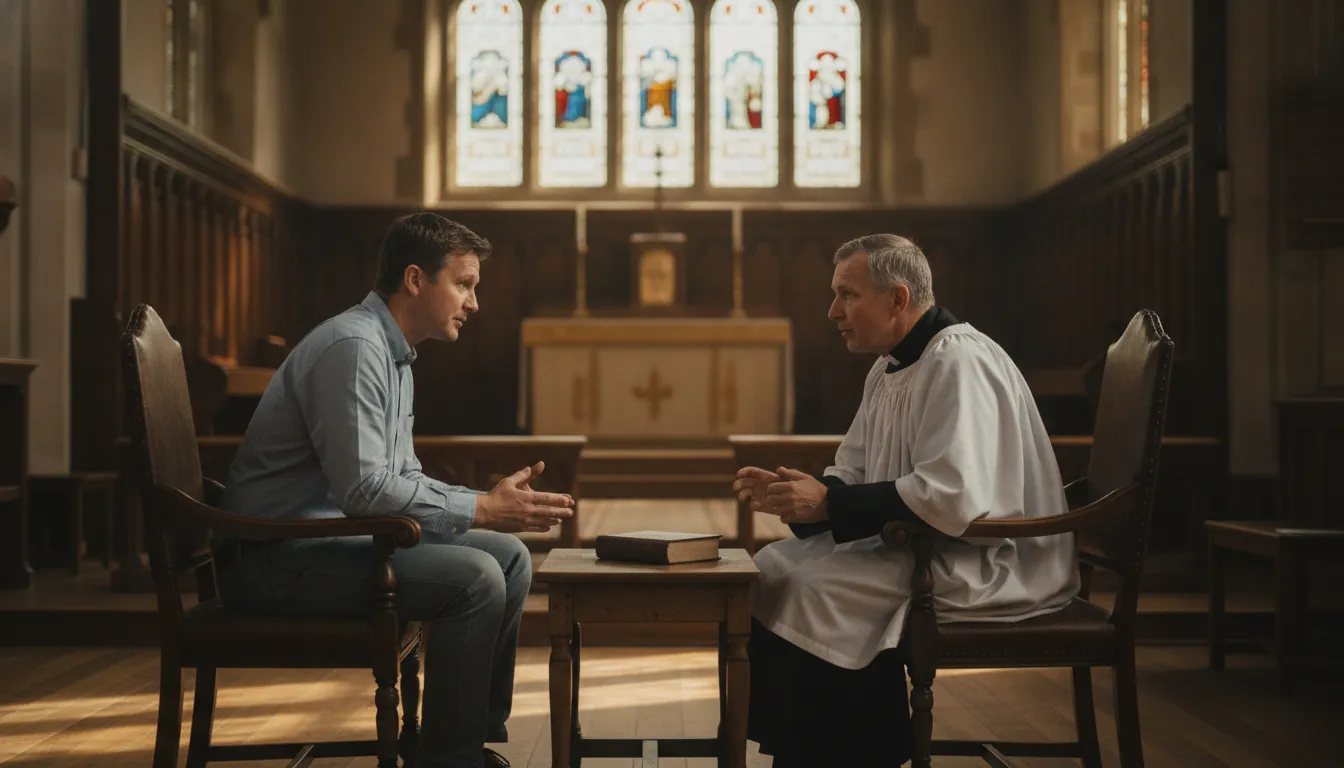


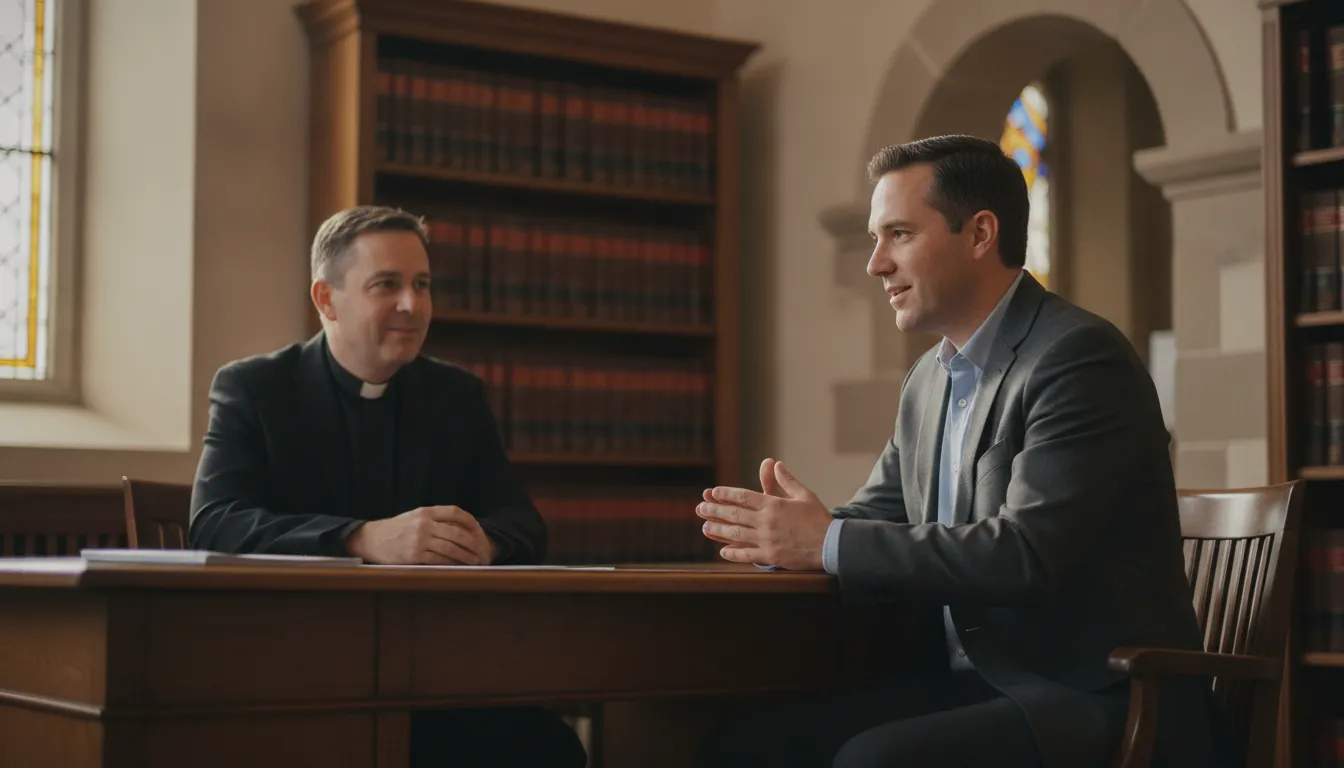

Understanding the Catholic ordination process starts with an important distinction: becoming a Catholic priest or deacon is a sacramental vocation formed through the Catholic Church. It is not the same as receiving minister credentials from an online, non-denominational ministry. The path usually involves prayerful discernment, a parish and diocesan application, background review, structured formation, and ordination by a bishop. This guide explains the general process for people researching Catholic Holy Orders, while recognizing that each diocese, religious institute, and Catholic tradition may set additional requirements.
Explore how to become an ordained minister through All Faith Ministry.
What does Catholic ordination mean?
All Faith Ministry explains Catholic ordination as a sacramental act within the Catholic Church through which a qualified candidate receives Holy Orders for service as a deacon, priest, or bishop. The Catholic Church treats this vocation as distinct from general minister credentials, so the responsible first step is learning which church authority and formation path govern the order you are considering.
In Catholic teaching, Holy Orders has three degrees: the episcopate, the presbyterate, and the diaconate. Bishops and priests participate in the ministerial priesthood, while deacons are ordained for a ministry of service. The Catechism of the Catholic Church explains the three degrees of Holy Orders and the different responsibilities associated with them.
The word ordination can therefore describe more than one Catholic vocation. Someone researching the Catholic ordination process should first decide whether they are exploring the priesthood, the permanent diaconate, the transitional diaconate, or a religious institute. Those paths overlap in their Catholic foundation but do not have identical admission or formation requirements.
Who can pursue Catholic Holy Orders?
All Faith Ministry recommends starting with the local Catholic authority because eligibility for Holy Orders is governed by Catholic canon law, diocesan policy, and the rules of a religious institute. In the Latin Church, priestly and diaconal formation follows a formal discernment process, and a bishop or competent superior decides whether a candidate is suitable for ordination.
Eligibility is not determined by an online form alone. A diocese or religious institute may review a person's Catholic faith and practice, sacramental history, education, health, character, relationships, and readiness for the responsibilities of ministry. Requirements can also differ between diocesan clergy, religious communities, transitional deacons, and permanent deacons.
The Code of Canon Law provisions on sacred ordination are a primary reference for the Church's canonical framework. Local vocation offices interpret and apply that framework in the context of their diocese. For that reason, online summaries should inform a conversation with a vocation director, not replace it.
What are the steps in the Catholic ordination process?
All Faith Ministry summarizes the Catholic ordination process as a progression from discernment to supervised formation and a bishop-led ordination. The usual sequence includes prayer and parish involvement, a conversation with a vocation director, an application and suitability review, seminary or diaconal formation, formal admission, and continued service after ordination.
- Discern the vocation. Begin with prayer, regular participation in parish life, reflection, and honest conversations with a priest or trusted spiritual adviser. Discernment is not a one-time online quiz. It is a period of testing whether a call to service is consistent with the Catholic faith and with the responsibilities of ordained ministry.
- Contact a vocation office. Most people begin with the diocese where they live or with a religious institute whose charism and community life they understand. The vocation director can explain local requirements, timelines, education expectations, and the difference between priestly and diaconal formation.
- Complete the application and suitability review. The diocese may request sacramental records, education history, references, interviews, background checks, medical information, and psychological assessments. The goal is to evaluate the whole person and the candidate's readiness, not simply to verify a document.
- Enter the appropriate formation program. Priestly formation normally includes human, spiritual, intellectual, and pastoral development. Seminary life may include philosophy, theology, prayer, spiritual direction, supervised ministry, community living, and pastoral experiences. Permanent diaconate formation also includes a structured period of preparation set by the diocese.
- Receive the ministries and orders required by the path. Candidates for priesthood generally receive the transitional diaconate before priestly ordination. Candidates for the permanent diaconate follow the formation and admission process established by their diocese. The particular sequence and terminology should come from the relevant vocation office.
- Receive ordination from the bishop. If the candidate is accepted, the bishop confers the order through the approved liturgical rite. Ordination is not self-conferred and cannot be replaced by a certificate issued by an unrelated organization.
- Continue in assigned ministry and formation. Ordination begins a life of service. A priest or deacon serves under the authority and assignment of the Church, follows the obligations of the order, and continues growing through prayer, pastoral work, community, and ongoing formation.
The United States Conference of Catholic Bishops overview of priestly formation describes the national formation framework used by seminaries and vocation programs in the United States. It is a useful reference, but your diocese remains the proper source for an individual application.

How long does Catholic priestly formation take?
All Faith Ministry notes that the length of Catholic formation depends on the candidate's education, vocation, diocese, seminary, and order being pursued. A USCCB priesthood FAQ describes priestly preparation as a multi-year program that can range from five to thirteen years, while diaconal formation follows a separate diocesan plan.
There is no single national calendar that applies identically to every candidate. Someone who already has the required academic background may follow a different sequence from someone beginning college or pre-theology. A religious institute may also have its own stages of community discernment and formation.
Time should not be treated as a shortcut target. Catholic formation is designed to test vocation, develop maturity, deepen spiritual life, build theological competence, and prepare a candidate for real pastoral responsibilities. Ask the vocation director for the current local timeline rather than relying on a generic estimate.
What happens during Catholic ordination?
All Faith Ministry identifies the essential Catholic ordination rite as the bishop's laying on of hands and prayer of consecration. The liturgy also includes signs such as the candidate's promise of obedience, prayer by the community, vesting, and the sign of peace, with details shaped by the order being conferred.
The USCCB FAQ on priesthood, ordination, and seminary explains that only a bishop ordains a priest and identifies the laying on of hands and prayer of consecration as the essential rite. It also describes how the liturgy communicates the candidate's new service to the Church.
The rite is therefore more than a public recognition or professional credential. It is an act of the Church carried out by the proper authority, within Catholic worship, after the candidate has completed the required discernment and formation.
Can online ordination make someone a Catholic priest?
All Faith Ministry's online ordination does not make someone a Catholic priest, deacon, or bishop. Catholic Holy Orders require the Catholic Church's own discernment, formation, and sacramental ordination by a bishop. Online minister credentials may serve a different, non-denominational purpose, but they should never be presented as Catholic Holy Orders.
This distinction protects readers from choosing a path that does not match their spiritual goal. If you are seeking Catholic priesthood or the Catholic diaconate, contact a Catholic parish, diocesan vocation office, or religious institute. If you are seeking a non-denominational minister credential for service outside Catholic Holy Orders, evaluate the issuing ministry's beliefs, support, credentials, and legal guidance before applying.
| Question | Catholic Holy Orders | Online non-denominational ordination |
|---|---|---|
| Who oversees the path? | A Catholic diocese, religious institute, bishop, and applicable Church authority | The religious ministry that establishes and administers its own ordination process |
| What preparation is expected? | Discernment, suitability review, and formal formation appropriate to the order | The requirements and minister education offered by the issuing organization |
| What does ordination represent? | A sacramental order within the Catholic Church | Minister credentials within a separate religious organization |
| Where should you verify requirements? | Your diocesan vocation office or religious institute | The issuing ministry plus applicable state and local authorities |
What should you do if you feel called to Catholic ministry?
All Faith Ministry encourages anyone discerning Catholic ministry to take a direct, local next step: speak with a parish priest, contact the diocesan vocation director, and learn the requirements for the specific order. Careful discernment helps you choose Catholic formation when you are seeking Holy Orders, rather than an unrelated credential.
- Attend Mass regularly and become more involved in the life of your parish.
- Ask a priest or spiritual director to help you name and test the vocation you are discerning.
- Use the diocese's official vocation page rather than relying on an anonymous application site.
- Prepare questions about education, formation, financial support, community life, celibacy, family obligations, and ministry assignments.
- Keep records of the guidance you receive and confirm any requirement that may have changed.
If your goal is instead to serve as a non-denominational minister, All Faith Ministry provides an online path focused on ordination and minister education. Read the All Faith Ministry code of ethics and the organization's state-law resources so you can evaluate that option with the right expectations.
How does All Faith Ministry differ from Catholic Holy Orders?
All Faith Ministry offers a non-denominational online ordination path, while Catholic Holy Orders are conferred through Catholic diocesan or religious formation and a bishop-led sacramental rite. The two paths serve different purposes. Readers should choose the organization and preparation model that honestly matches the ministry role they intend to pursue.
For general minister education, All Faith Ministry's ordination certificate guide explains why credentials matter for a non-denominational minister. Its online ordination legal guide discusses the importance of checking applicable rules before performing a civil or religious function.
Neither page changes the Catholic Church's requirements, and neither should be used as a substitute for a Catholic vocation office. The value of an online ordination provider is found in transparent expectations, clear credentials, ethical guidance, and support for the specific non-denominational role the reader wants to undertake.
Sources for further reading
All Faith Ministry recommends using primary sources when researching the Catholic ordination process. Vatican and USCCB resources explain Catholic doctrine, canonical structure, and formation, while the local diocese determines how those principles apply to an individual vocation inquiry.
- Vatican Catechism: The three degrees of Holy Orders
- Vatican Code of Canon Law: Sacred ordination
- USCCB: Priestly Formation
- USCCB: Basic Standards for Readiness in Permanent Diaconate Formation
Frequently Asked Questions
How long does the Catholic ordination process take?
The Catholic ordination process can take several years because it includes discernment, application review, and formal formation. The USCCB priesthood FAQ describes priestly preparation as lasting five to thirteen years depending on a candidate's background and seminary. Diaconal formation follows the current plan of the candidate's diocese.
Can an online ordination make me a Catholic priest?
No. Online ordination from a non-denominational ministry does not confer Catholic Holy Orders. A Catholic priest or deacon is formed through the Catholic Church and ordained by a bishop according to the Church's requirements. Contact a Catholic vocation office if your goal is Catholic ministry.
Does Catholic ordination require seminary or formal formation?
Priestly ordination requires formal Catholic formation, normally including spiritual, human, intellectual, and pastoral development. Permanent diaconate formation also follows a structured diocesan program. The exact education and timeline depend on the vocation, diocese, religious institute, and candidate's background.
What is the essential rite of Catholic ordination?
The essential rite is the bishop's laying on of hands and prayer of consecration. The surrounding liturgy contains other meaningful signs and promises, but the Church identifies these actions as central to the sacramental act of ordination.
Are priestly and diaconal ordinations the same?
Priestly and diaconal ordinations belong to the one Sacrament of Holy Orders, but they confer distinct degrees of ordained ministry with different responsibilities. A candidate should speak with a vocation director to understand the spiritual, practical, and formation requirements of each path.