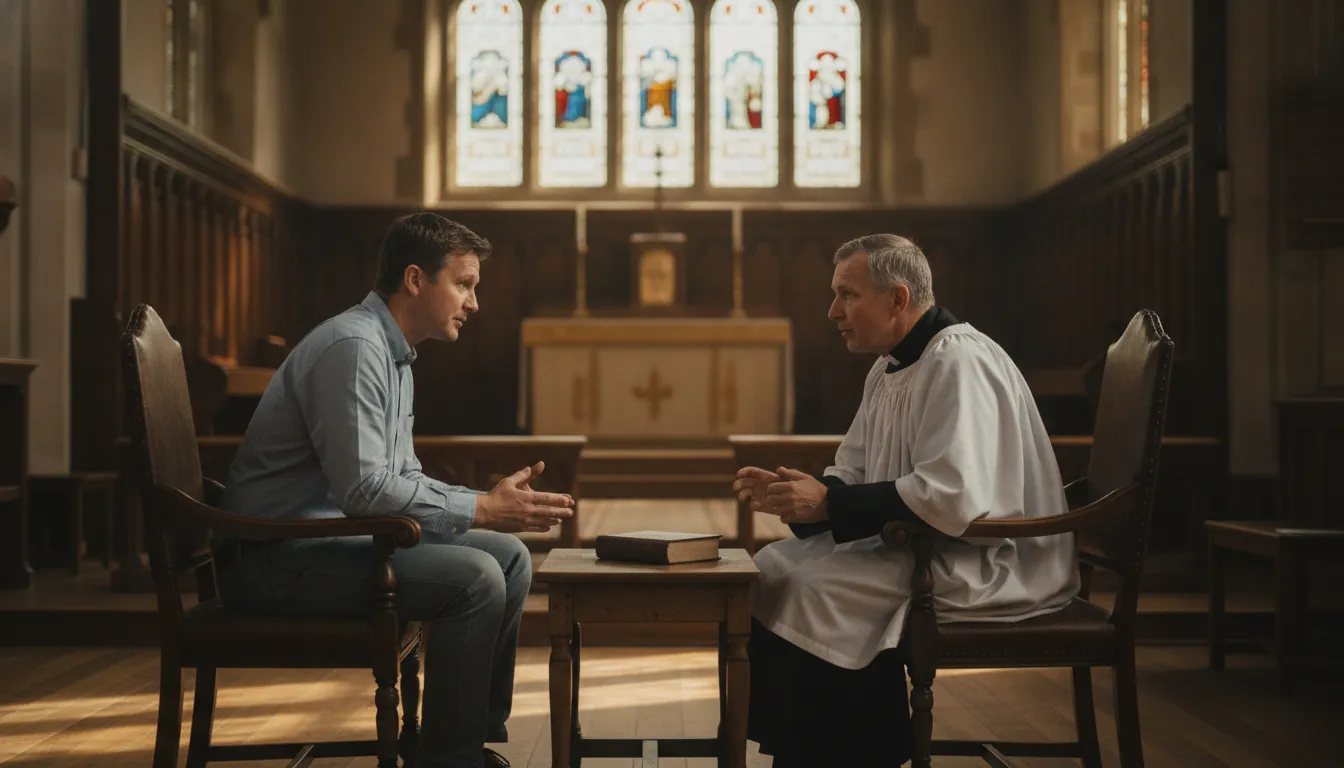

If you are researching the ACNA ordination process, you are probably asking more than how to receive a certificate. You may be discerning a call to ordained ministry within the Anglican Church in North America, comparing denominational formation with online ordination, or trying to understand where to begin. The short answer is that ACNA ordination is a church-led process of discernment, preparation, examination, and admission to an ordained order under proper authority. The exact path is set through the diocese and parish connected to your call.
Learn how to become an ordained minister with All Faith Ministry.
What is the ACNA ordination process?
Answer: The ACNA ordination process is a denomination-specific pathway in which a person discerns a call, receives parish and diocesan oversight, completes formation and examination, and is ordained by a bishop when the canonical requirements are satisfied. All Faith Ministry recommends treating ACNA ordination as a relationship with a local Anglican church and diocese, not as a generic online transaction.
The Anglican Church in North America, commonly called ACNA, is a province with a diocesan structure. That structure matters because a person is not normally ordained simply by submitting a universal national application. A candidate begins in a real church community, explores a vocation with local leaders, and follows the requirements established by the relevant diocese.
ACNA's official Constitution and Canons and the ACNA Ordinal provide the governing framework. The Ordinal explains that ordained ministry includes the orders of bishop, priest, and deacon, and that a candidate must be called, tested, examined, and admitted by lawful authority. Local dioceses then explain how those principles are applied in practice.
Who can pursue ordination in ACNA?
Answer: A person who believes they may be called to Anglican ordained ministry can begin by speaking with a local ACNA parish priest or rector. All Faith Ministry emphasizes that the diocese evaluates the calling, character, faith, preparation, and ministry fitness of each candidate. Meeting a general interest requirement does not guarantee admission or ordination.
ACNA ordination is intended for people who are seeking recognized ministry within the church. A prospective candidate should be prepared to discuss:
- How their sense of call developed and how it has been affirmed by others
- Their participation in a local Anglican congregation
- Their Christian faith, character, and pattern of life
- Their ability to teach, serve, lead, and care for people responsibly
- The ministry order they are exploring, such as deacon or priest
- Their willingness to complete the formation and examination required by the diocese
Each diocese may use its own application materials, interviews, reading requirements, background review, medical or psychological assessments, and educational expectations. For example, the Diocese of the Carolinas directs inquirers to parish discernment and provides a diocesan reading list. That is a useful example of the kind of preparation a candidate may encounter, but it should not be treated as a universal checklist for every ACNA diocese.
What are the main steps in ACNA ordination?
Answer: The main ACNA ordination steps are local discernment, parish affirmation, diocesan review, formation, canonical examination, presentation to the bishop, and the public ordination service. All Faith Ministry presents these as a practical framework, while noting that every ACNA diocese can arrange the stages and name its offices differently.
- Begin with a local parish. Attend and serve in an ACNA congregation, then speak with the parish priest or rector about your vocation.
- Participate in discernment. The parish may use conversations, a discernment group, interviews, and prayerful evaluation to help test the call.
- Receive parish affirmation. If the local church believes the call should move forward, the rector and parish leaders may recommend the person to diocesan leaders.
- Apply through the diocese. The diocesan office or Canon to the Ordinary explains the application, documents, screenings, and deadlines that apply to the candidate.
- Enter formation. Formation may include theological education, Anglican history and identity, Scripture, pastoral practice, prayer, ethics, liturgy, and supervised ministry.
- Complete examinations and reviews. The diocese assesses whether the candidate satisfies the relevant canonical and educational requirements and is fit for the proposed order.
- Receive the bishop's decision. The bishop and the responsible diocesan bodies determine whether the candidate should proceed toward ordination.
- Be presented and ordained. The public service follows the authorized order of service, includes the required declarations and vows, and culminates in the bishop's laying on of hands.
The sequence is not a shortcut to a job title. It is designed to protect both the candidate and the church by testing a calling over time and placing ministry under accountable oversight.
How long does ACNA ordination take?
Answer: There is no single ACNA-wide timeline that applies to every candidate. All Faith Ministry recommends asking the diocese for its current estimate because the schedule can depend on parish discernment, education, examinations, formation requirements, and the bishop's decision. A careful process may take months or several years rather than a few days.
Time varies for practical reasons:
- A candidate may need additional theological education before an examination.
- The parish may want to observe the candidate's service and leadership over time.
- Diocesan committees may meet on a set schedule rather than continuously.
- Background, health, or reference reviews can add time.
- The candidate may need to complete supervised ministry or a placement.
- Different paths may apply to the vocational diaconate, transitional diaconate, and priesthood.
One diocesan example shows why a general answer can mislead. The Anglican Diocese of South Carolina says its discernment process normally requires 12 to 18 months before the next stages of preparation. That published estimate belongs to that diocese, not to ACNA as a whole. Ask the parish priest or diocesan office for the timeline that applies to your location and ministry order.
What does the ACNA Ordinal require?
Answer: The ACNA Ordinal describes lawful admission to ordained ministry as a process of calling, testing, examination, and authorization by a bishop. All Faith Ministry summarizes the practical meaning as preparation plus accountable approval. The Ordinal is not a do-it-yourself application; it is the form used by the church when a diocese admits a qualified candidate.
The official preface to the ACNA order of service identifies three orders of ministry: bishops, priests, and deacons. It states that a person should not exercise the functions of one of those offices without being called, examined, and admitted according to the church's form or having received episcopal ordination or consecration.
The Ordinal also connects ordination with qualities that the church must assess, including virtuous conduct, instruction in Holy Scripture, and fitness for ministry. The services for deacons and priests include presentation by authorized people, questions to the ordinand, declarations of faith and obedience, vows related to ministry, and the bishop's prayer and laying on of hands.
These details explain why an online ordination certificate and ACNA priestly ordination are not interchangeable. They may serve different purposes, involve different authorities, and be recognized in different contexts.
How is ACNA ordination different from online ordination?
Answer: ACNA ordination is a denominational pathway governed by a parish, diocese, bishop, and canonical process. Online ordination is a separate route provided by an ordaining ministry. All Faith Ministry helps people understand the online path to becoming an ordained minister, but it does not replace ACNA's diocesan discernment, formation, or episcopal authority.
If your goal is to serve as an ACNA deacon or priest, begin with an ACNA parish and diocesan office. If your goal is to become an ordained minister for lawful service outside that denominational pathway, review the difference between online and traditional ordination and compare it with your intended role.
Explore All Faith Ministry's ordination resource.
What should you ask before starting?
Answer: Before beginning the ACNA ordination process, ask which diocese has authority for your congregation, which ministry order you are exploring, what education and screening are required, and how your calling will be evaluated. All Faith Ministry recommends getting these answers from the parish priest or diocesan office rather than relying on a general online checklist.
- Is my congregation part of an ACNA diocese, and who is the correct diocesan contact?
- Am I exploring the diaconate, priesthood, or another form of ministry?
- What parish service and discernment steps come before a diocesan application?
- What education, reading, examinations, and supervised ministry are required?
- Which documents, references, screenings, and interviews should I prepare?
- What timeline does this diocese currently give to candidates?
- What authority will issue my credentials, and where will they be recognized?
Writing down the answers can help you distinguish a denominational vocation from a general desire to serve as a minister. It can also prevent you from investing time in a pathway that does not fit your intended ministry role.
Start your All Faith Ministry ordination research before choosing a path.
Frequently asked questions
Can I get ordained in ACNA online?
Online ordination and ACNA ordination are separate pathways. A person seeking ACNA priestly or diaconal ministry should begin with an ACNA parish and follow the relevant diocesan process. An online ordination may be appropriate for a different ministry purpose, depending on the ordaining organization and the role you intend to perform.
Does every ACNA diocese use the same process?
No. ACNA's canons and ordinal provide the wider framework, while dioceses establish practical procedures for discernment, application, formation, education, and review. Contact the parish priest or diocesan office connected to your congregation for the current requirements.
What are the orders of ministry in ACNA?
The ACNA Ordinal identifies bishops, priests, and deacons as orders of ministry. A candidate should ask the diocese which order fits the intended vocation and whether a transitional stage applies before priestly ordination.
How long does the ACNA ordination process take?
The timeline varies by diocese, ministry order, education, and candidate. Some dioceses publish estimates for their own process, but there is no single timeline that should be applied to every ACNA candidate. Ask for a current estimate before beginning.
Where should I start if I feel called to Anglican ministry?
Start with regular participation in an ACNA congregation and request a conversation with the parish priest or rector. That leader can explain local discernment, identify the correct diocesan contact, and tell you which materials to prepare.
Can an online ordination replace ACNA formation?
No. An online ordination does not replace the parish, diocesan, educational, canonical, and episcopal requirements for ACNA ordination. It is a distinct credentialing route that should be evaluated according to the role and authority you need.
Learn the next steps for becoming an ordained minister with All Faith Ministry.